


The event to highlight the excellence of research and the business impact of space sciences in Catalonia brings together more than 200 stakeholders
- The event has brought together heads of leading research centres and groups, managers of scientific and technical infrastructures, representatives of space agencies and programmes, as well as companies from the sector
- The aim of the meeting was to identify and raise the profile of the main actors shaping the Catalan space ecosystem and to strengthen the interconnection between the various agents in the value chain
- The event was organised by the Ministry of Research and Universities of the Government of Catalonia and the Institute of Space Studies of Catalonia (IEEC), with the collaboration of the Ministry of Business and Labour

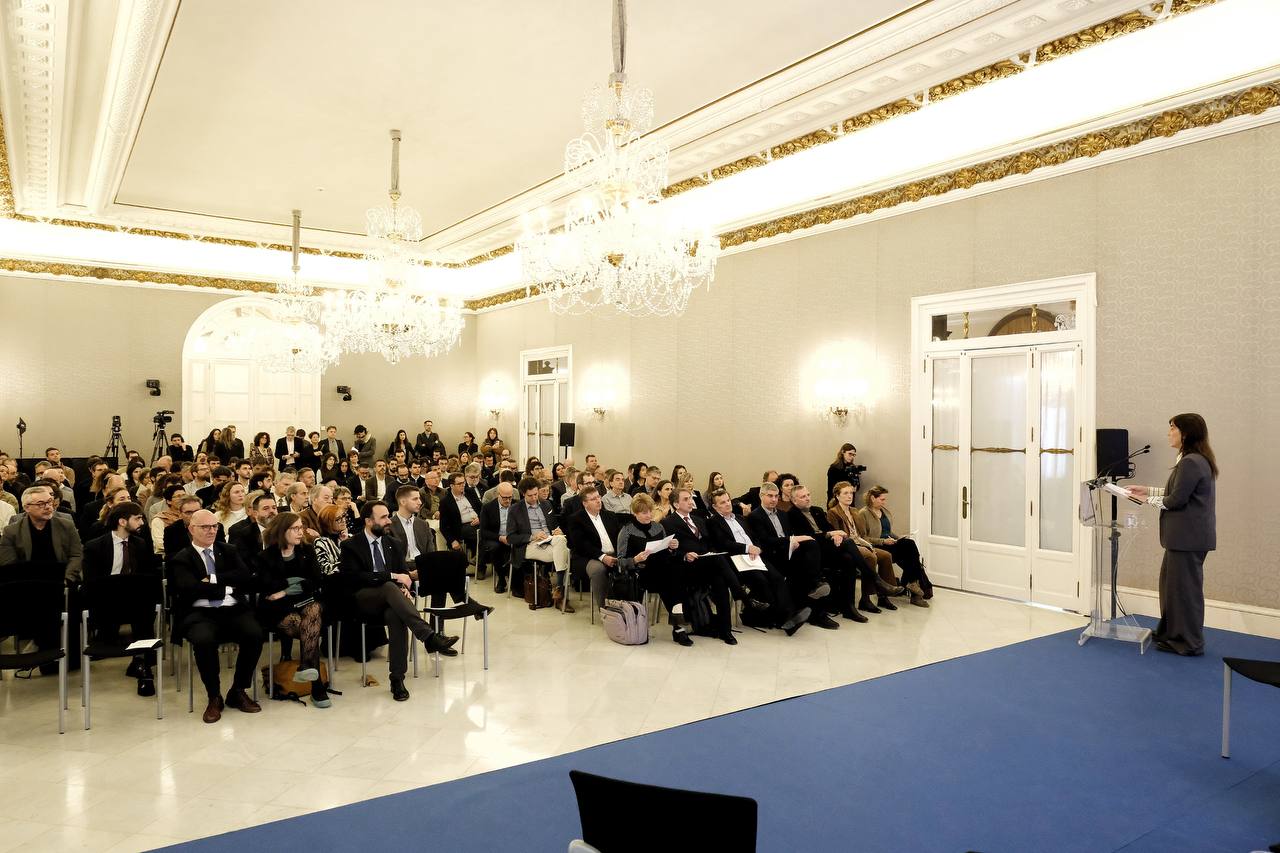
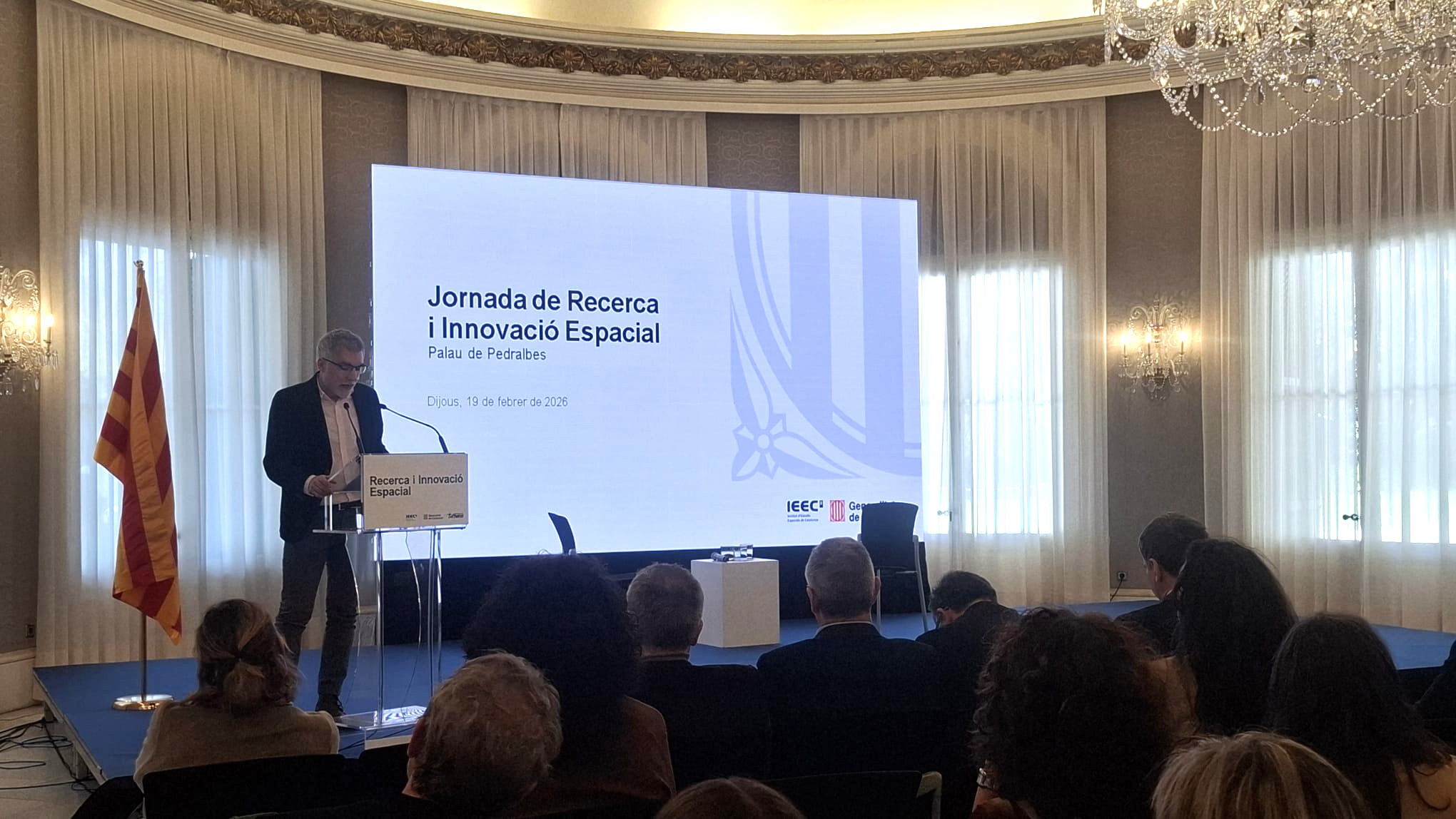
The Palau de Pedralbes in Barcelona hosted this morning the Space Research and Innovation Day, an institutional gathering highlighting the potential, diversity, and excellence of space science research in Catalonia, as well as its capacity to generate knowledge transfer and tangible impact on business activity within the space sector.
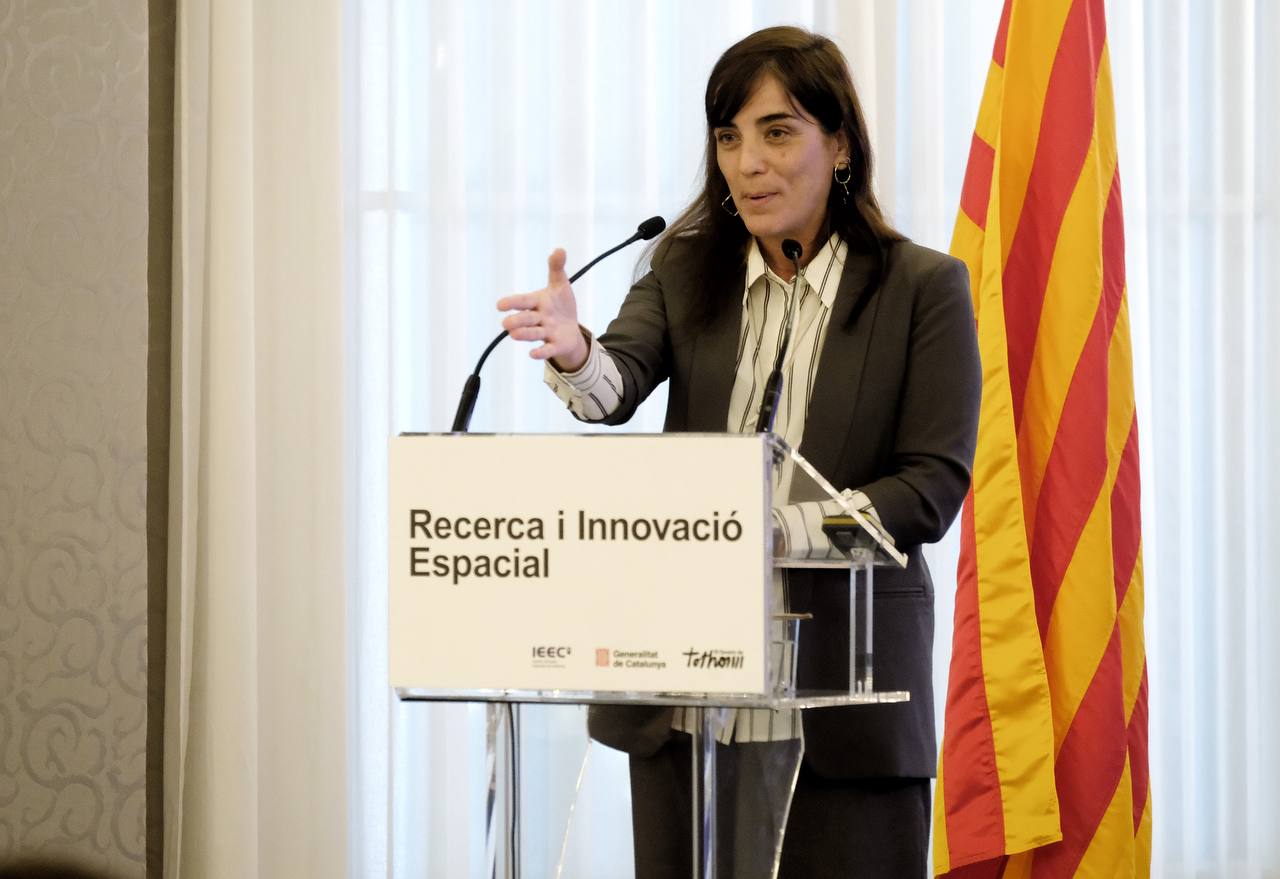
In her institutional address, Minister for Research and Universities Núria Montserrat emphasised that “research and innovation in the space sector are a lever for technological, economic, and social transformation, impacting sectors as diverse as agriculture, mobility, energy, land management, and the fight against climate change.” In this regard, the Minister added that “talking about space today is no longer just about exploration; it is also about security, sustainability, industrial competitiveness, and digital transformation. About data that improves decision-making, innovations that create new companies, and skilled jobs. Ultimately, it is about a future we want to build, in which Catalonia intends to play a role—with knowledge, with talent, and with a European commitment—making research and innovation a true national policy.”
On his part, the Minister of Business and Labour, Miquel Sàmper, closed the meeting by stating that “today we want to highlight that the Catalan space sector is a complete and growing ecosystem: there is talent, there is innovation, there are emerging and established companies, and there is infrastructure that enables cutting-edge projects.” The Minister also emphasised the Catalunya Space 2030 Strategy, “the Government’s roadmap reflecting the country’s ambition to lead the future of space through innovation, talent, and public-private collaboration, in line with European and Spanish strategies.” “Catalonia has talent, knowledge, and infrastructure. Now it is up to us to work together to transform this potential into real results, more competitive companies, leading projects, and future opportunities for the country,” Sàmper concluded.
Meeting point of the Catalan space ecosystem
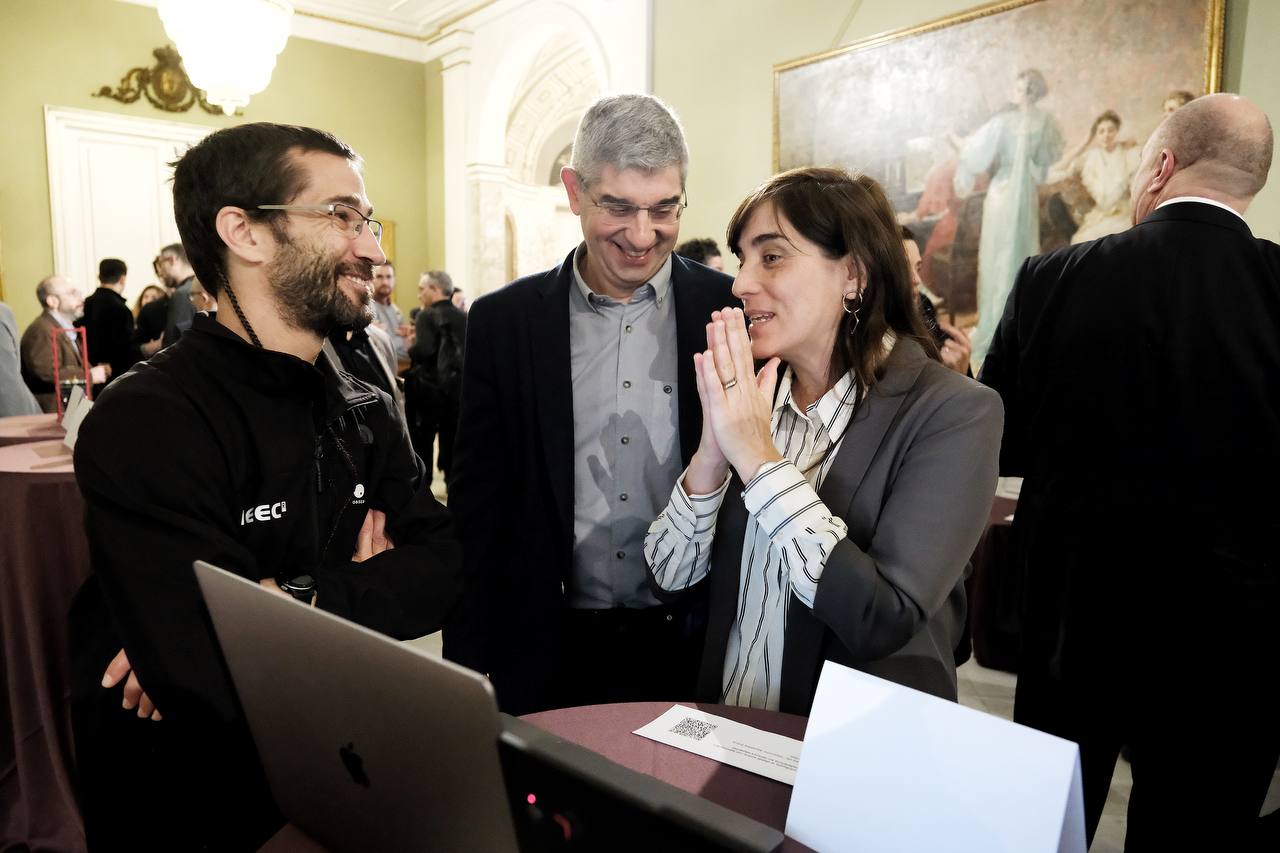
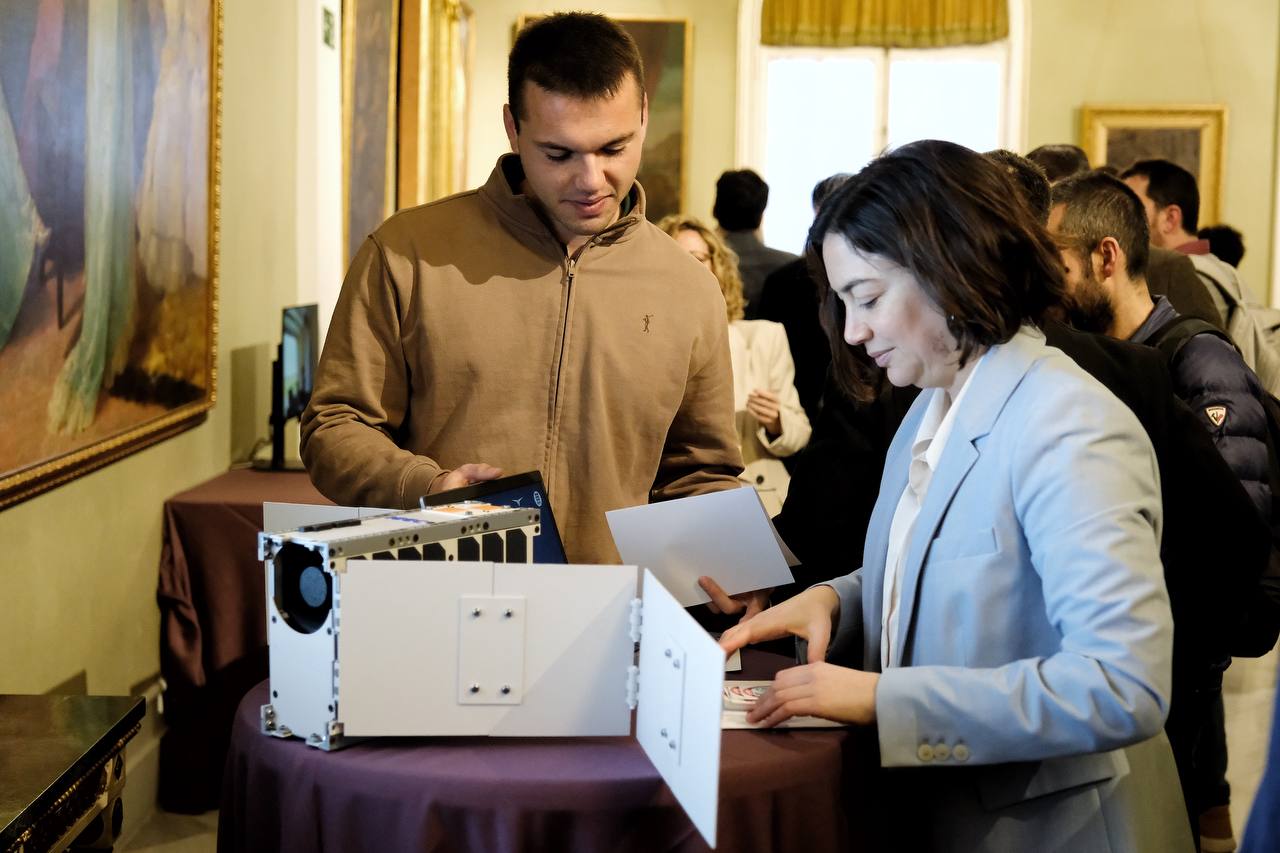
The Space Research and Innovation Day was organised by the Ministry of Research and Universities and the Institute of Space Studies of Catalonia (IEEC), with the collaboration of the Ministry of Business and Labour. The event brought together over 200 actors from the system, including leaders of leading research centres and groups, managers of scientific and technical infrastructures, representatives of space agencies and programmes, as well as established companies and emerging spin-offs in the sector.
The goal of the day was to identify and showcase the main actors shaping Catalonia’s space ecosystem and to strengthen connections between the various stakeholders along the value chain, fostering synergies and new opportunities for collaboration.
In the context of sustained growth in the global space sector, the Day highlighted the economic, scientific, and technological impact of this strategic field, as well as Catalonia’s role as a hub for space research and innovation. During the session, notable academic and industrial initiatives were also presented, alongside success stories that exemplify the region’s ability to transform scientific knowledge into globally impactful innovation.
The Space Research and Innovation Day takes place just a few months before the total solar eclipse that will occur in Catalonia on 12 August, an exceptional astronomical event not seen in the region for over a century. To harness its potential for scientific outreach, as well as to ensure safety, the Government has launched the “Catalonia Looks to the Sky” initiative, an interdepartmental action plan led by President Salvador Illa with the support of the Vice-Presidency of Minister for Research and Universities Núria Montserrat, aimed at providing a safe, participatory, and enriching experience for the entire population.
A commission composed of thirteen Government ministries, and supported scientifically and technically by institutions such as the IEEC and other leading centres in astronomical research and space observation, has been overseeing these objectives since its establishment in May 2025.

Round tables on research, innovation and knowledge transfer
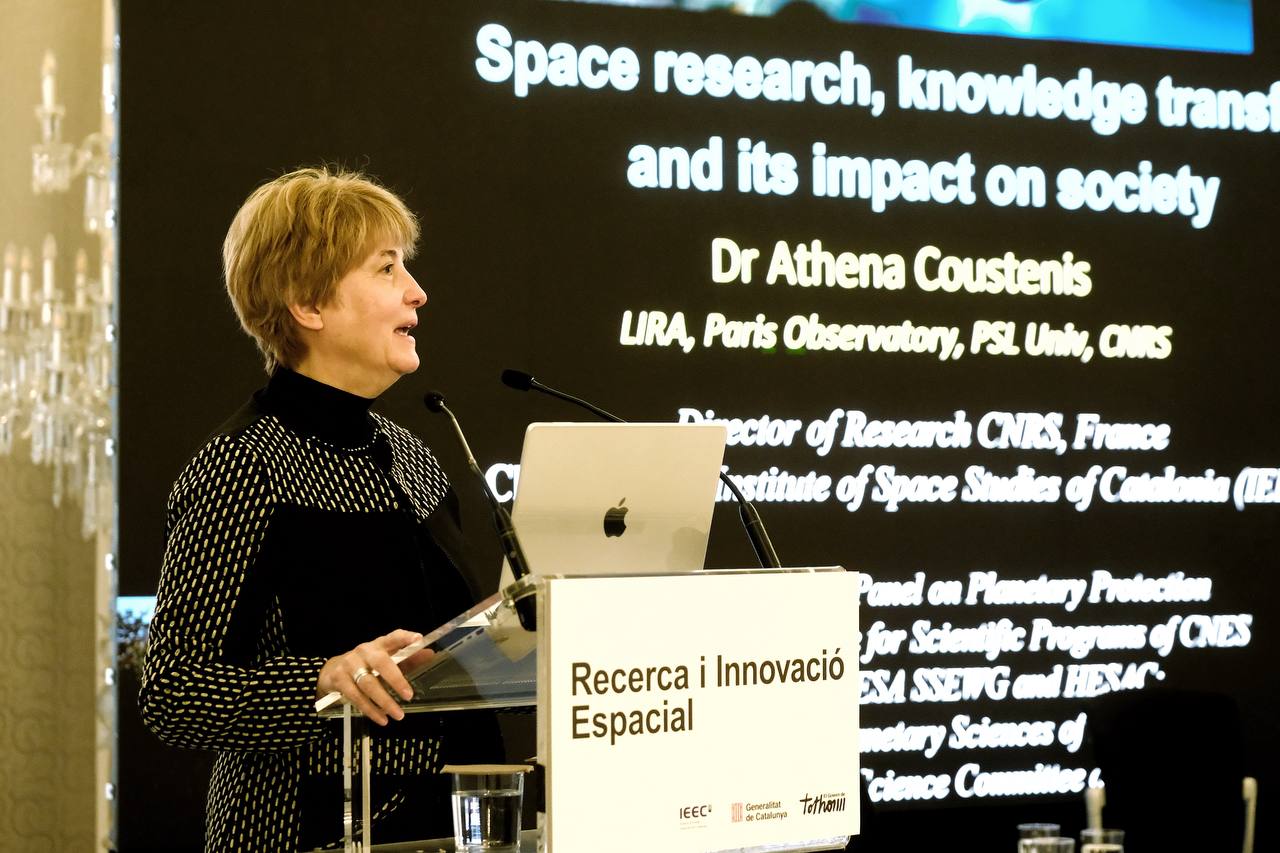
Following the institutional welcome, the day began with a presentation on space research, its transfer, and societal impact, delivered by the Director of Research at the National Centre for Scientific Research (CNRS), Athena Coustenis.
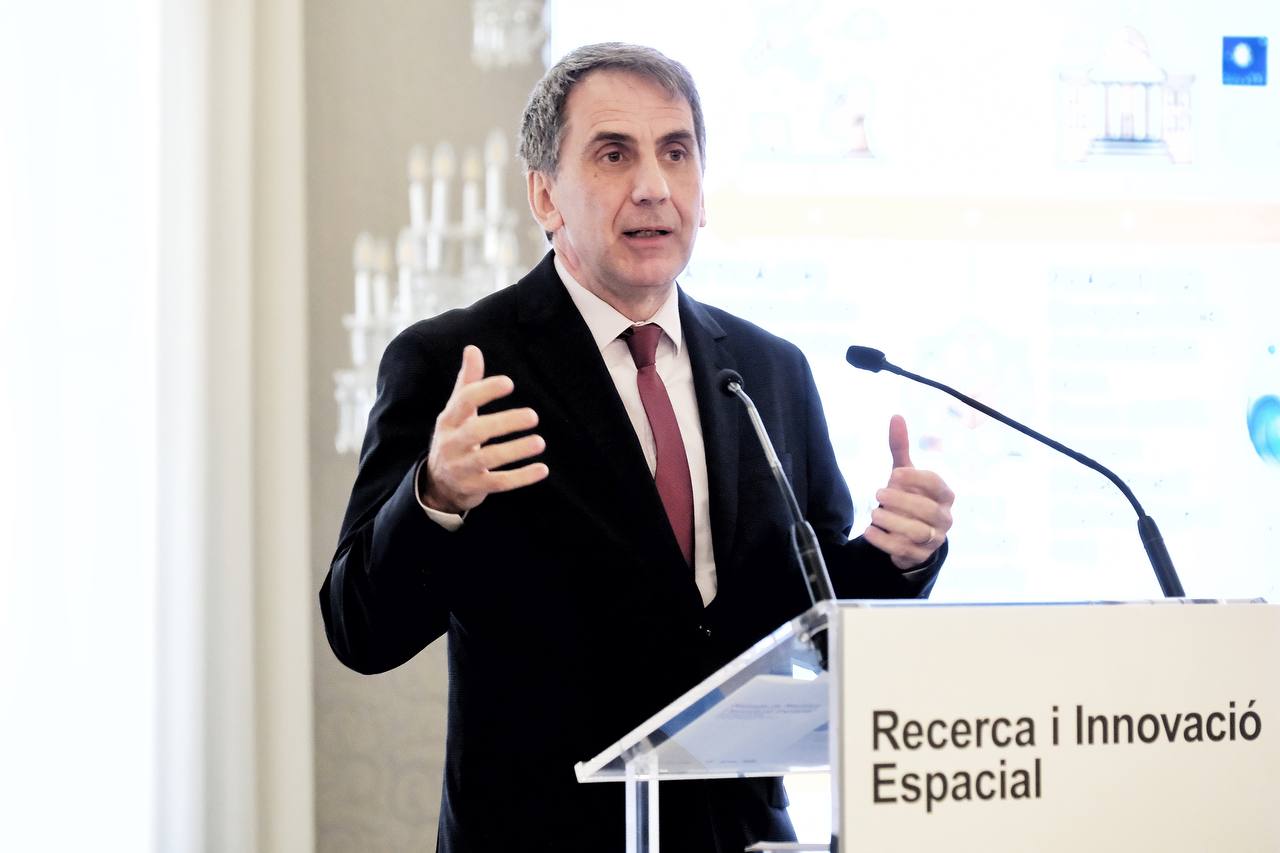
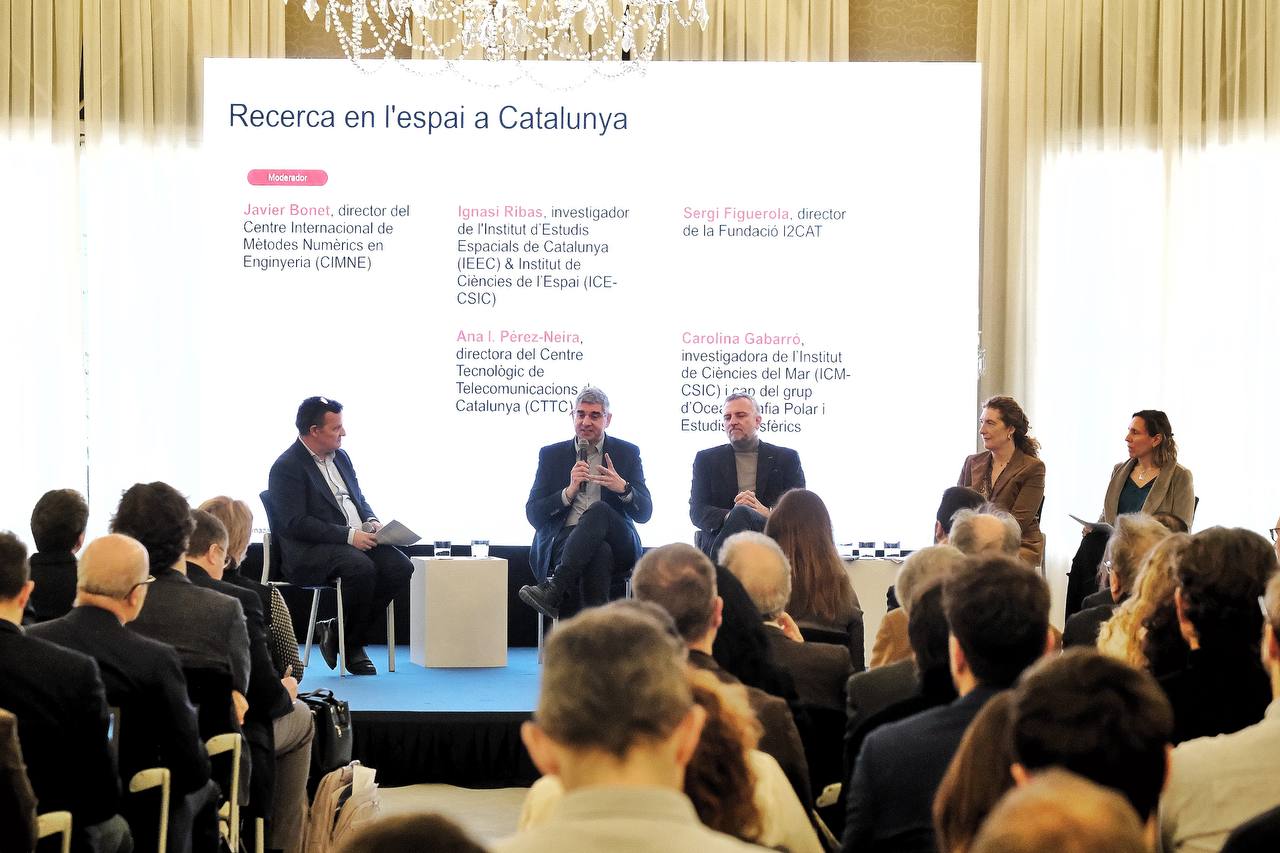
Once this concluded, the first of the four round tables structuring the event took place, dedicated to innovative research, introduced by the Director of the IEEC, Xavier Luri. The subsequent round table, moderated by the Director of the International Centre for Numerical Methods in Engineering (CIMNE), Javier Bonet, included the participation of Ignasi Ribas, researcher at the Institute of Space Studies of Catalonia (IEEC) and at the Institute of Space Sciences (ICE-CSIC); Sergi Figuerola, Director of the I2CAT Foundation; Ana I. Pérez-Neira, Director of the Telecommunications Technological Centre of Catalonia (CTTC); and Carolina Gabarró, researcher at the Institute of Marine Sciences (ICM-CSIC) and Head of the Polar Oceanography and Cryospheric Studies group.
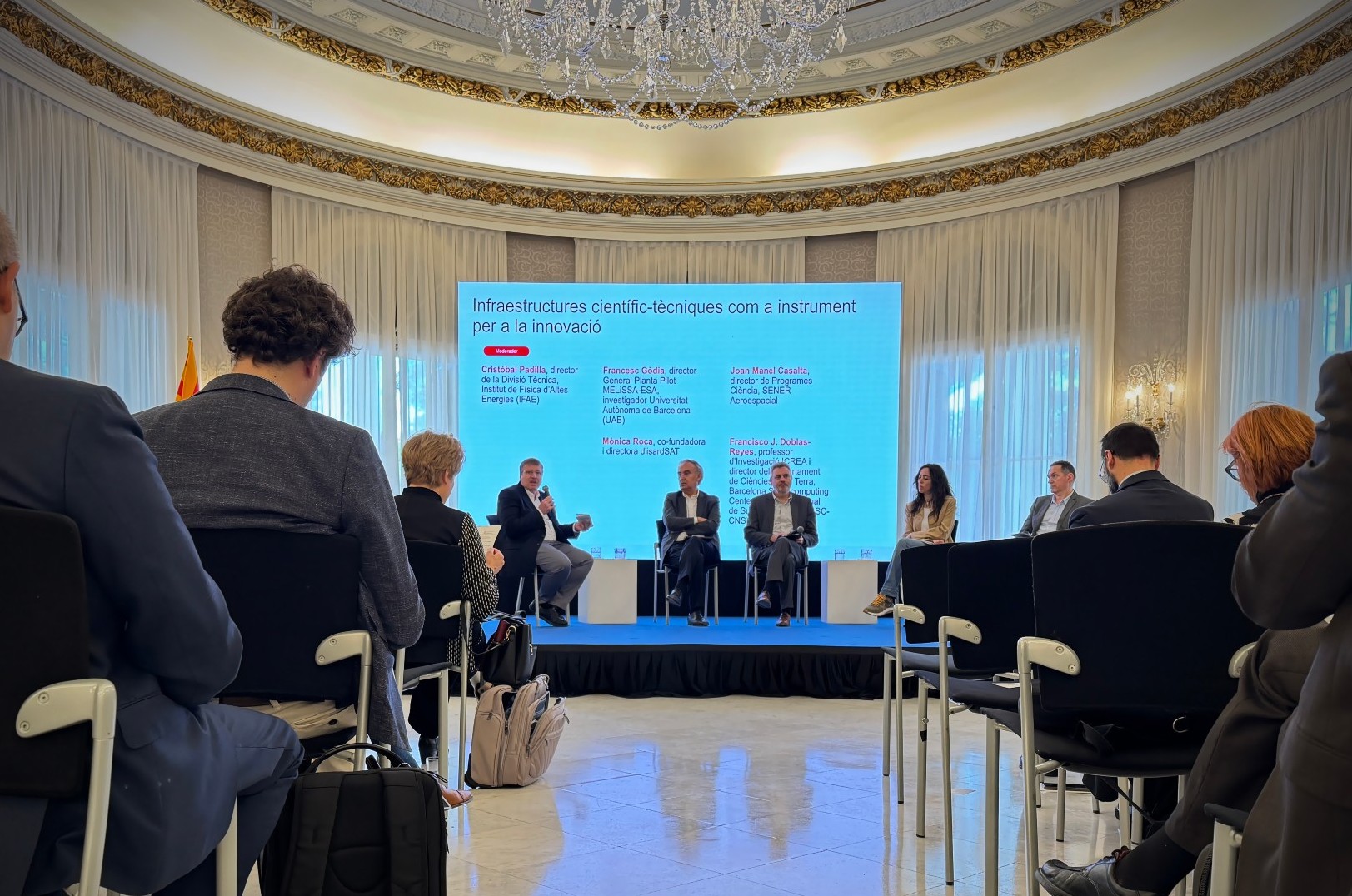
Scientific and technical infrastructures as instruments for innovation featured as the second session of the day, opened with a presentation by the Director General for Knowledge Transfer and Society at the Ministry of Research and Universities, Javier Selva. The discussion on this topic brought together Francesc Gòdia, Director General of the MELiSSA-ESA Pilot Plant and researcher at the Autonomous University of Barcelona (UAB); Mònica Roca, co-founder and Director of isardSAT; Joan Manel Casalta, Director of Science Programmes at SENER Aeroespacial; and Francisco J. Doblas-Reyes, ICREA Research Professor and Director of the Department of Earth Sciences at the Barcelona Supercomputing Center – National Supercomputing Centre (BSC-CNS). The session was moderated by Cristóbal Padilla, Director of the Technical Division at the Institute of High Energy Physics (IFAE).
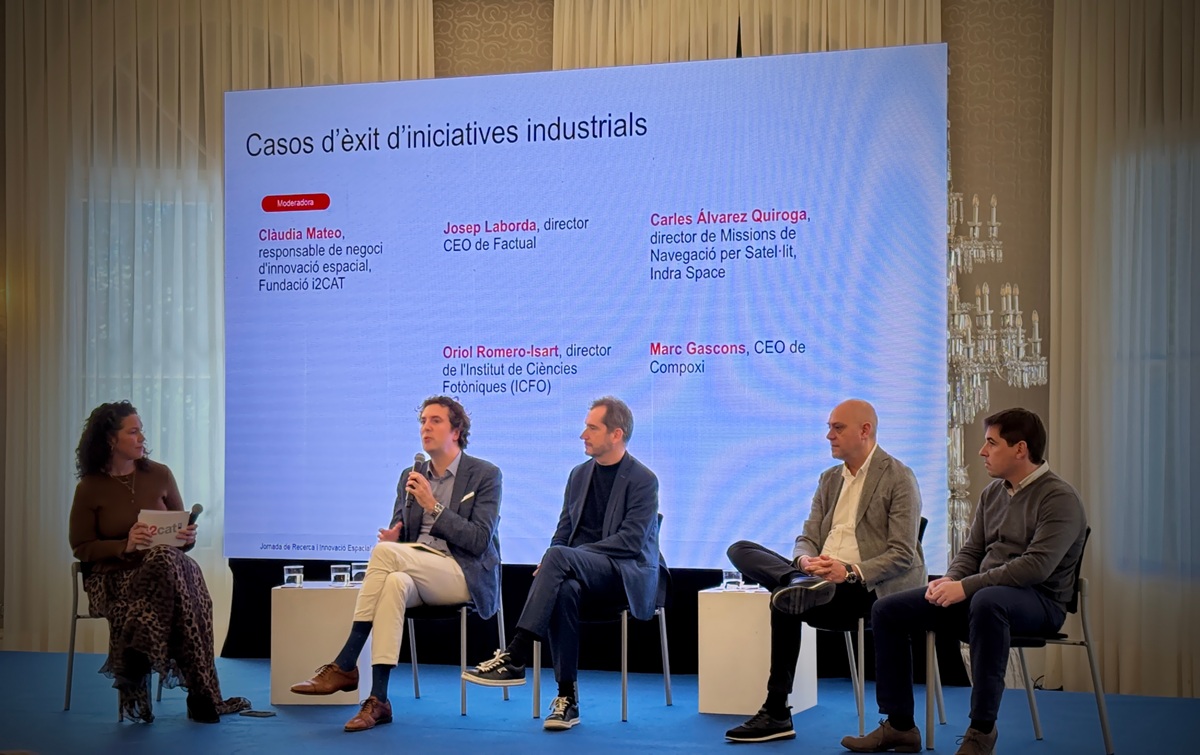
The third focus of the day centred on successful industrial initiatives and was introduced by Maria Galindo, Secretary of Digital Policies at the Ministry of Business and Labour. The subsequent round table, moderated by Clàudia Mateo, Head of Space Innovation Business at the i2CAT Foundation, brought together Josep Laborda, CEO of Factual; Oriol Romero-Isart, Director of the Institute of Photonic Sciences (ICFO); Carles Álvarez Quiroga, Director of Satellite Navigation Missions at Indra Space; and Marc Gascons, CEO of Compoxi.
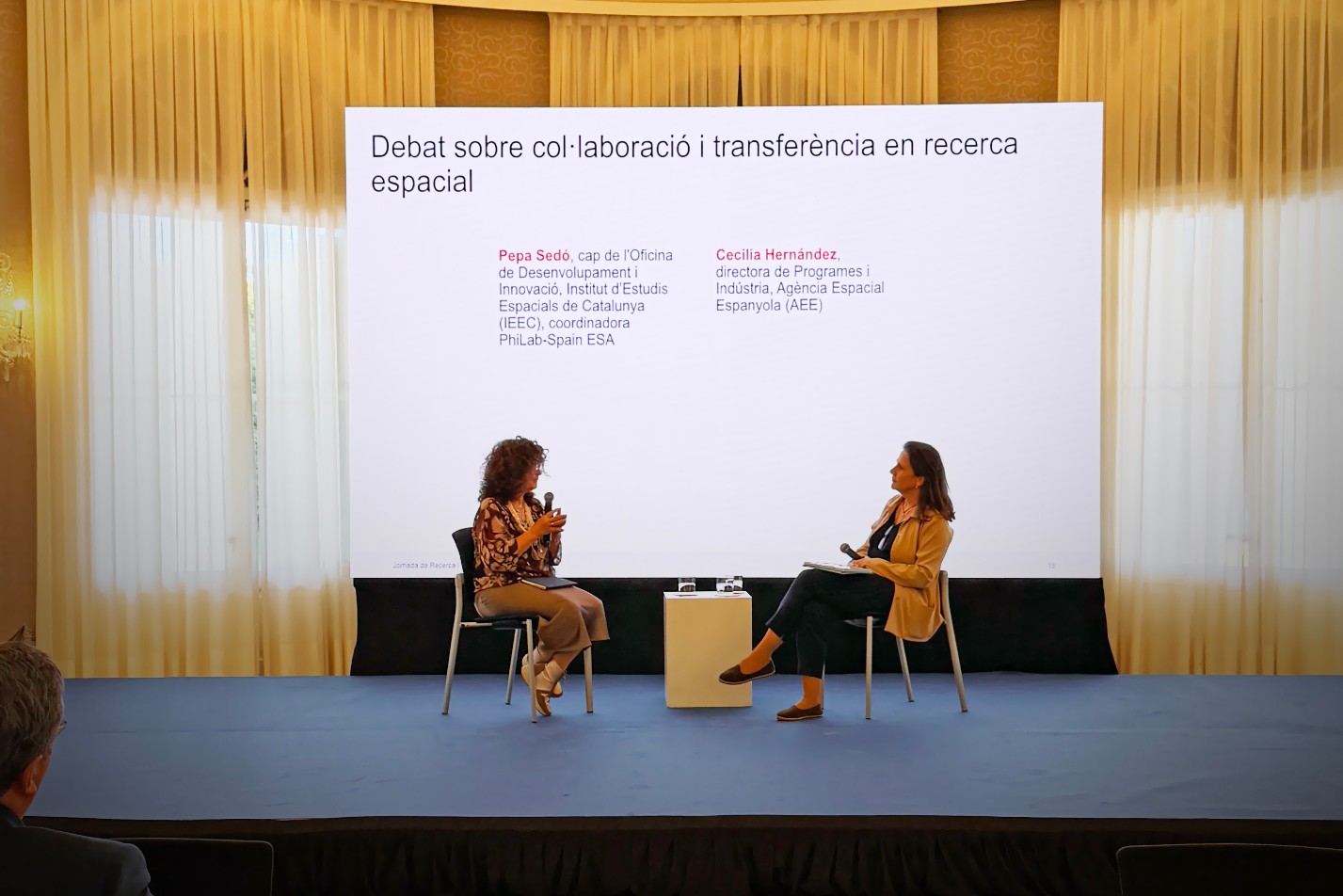
The day concluded with a debate on collaboration and knowledge transfer in space research, led by Pepa Sedó, Head of the Development and Innovation Office at the Institute of Space Studies of Catalonia (IEEC) and Coordinator of PhiLab-Spain ESA, and Cecilia Hernández, Director of Programmes and Industry at the Spanish Space Agency (AEE). Finally, Josep Colomé, Director of the Area for the Promotion of the Space Sector of Catalonia (APEC), presented the conclusions of the event.
Image gallery
Contacts
IEEC Communication Office
Castelldefels, Barcelona
E-mail: comunicacio@ieec.cat
About the IEEC
The Institute of Space Studies of Catalonia (IEEC — Institut d’Estudis Espacials de Catalunya) promotes and coordinates space research and technology development in Catalonia for the benefit of society. IEEC fosters collaborations both locally and worldwide and is an efficient agent of knowledge, innovation and technology transfer. As a result of more than 25 years of high-quality research, done in collaboration with major international organisations, IEEC ranks among the best international research centres, focusing on areas such as: astrophysics, cosmology, planetary science, and Earth Observation. IEEC’s engineering division develops instrumentation for ground- and space-based projects, and has extensive experience in working with private or public organisations from the aerospace and other innovation sectors.
The IEEC is a non-profit public sector foundation that was established in February 1996. It has a Board of Trustees composed of the Generalitat de Catalunya, Universitat de Barcelona (UB), Universitat Autònoma de Barcelona (UAB), Universitat Politècnica de Catalunya · BarcelonaTech (UPC), and the Spanish Research Council (CSIC). The IEEC is also a CERCA centre.