


Catalonia Space Labs
Thermal Vacuum Chamber (TVAC)
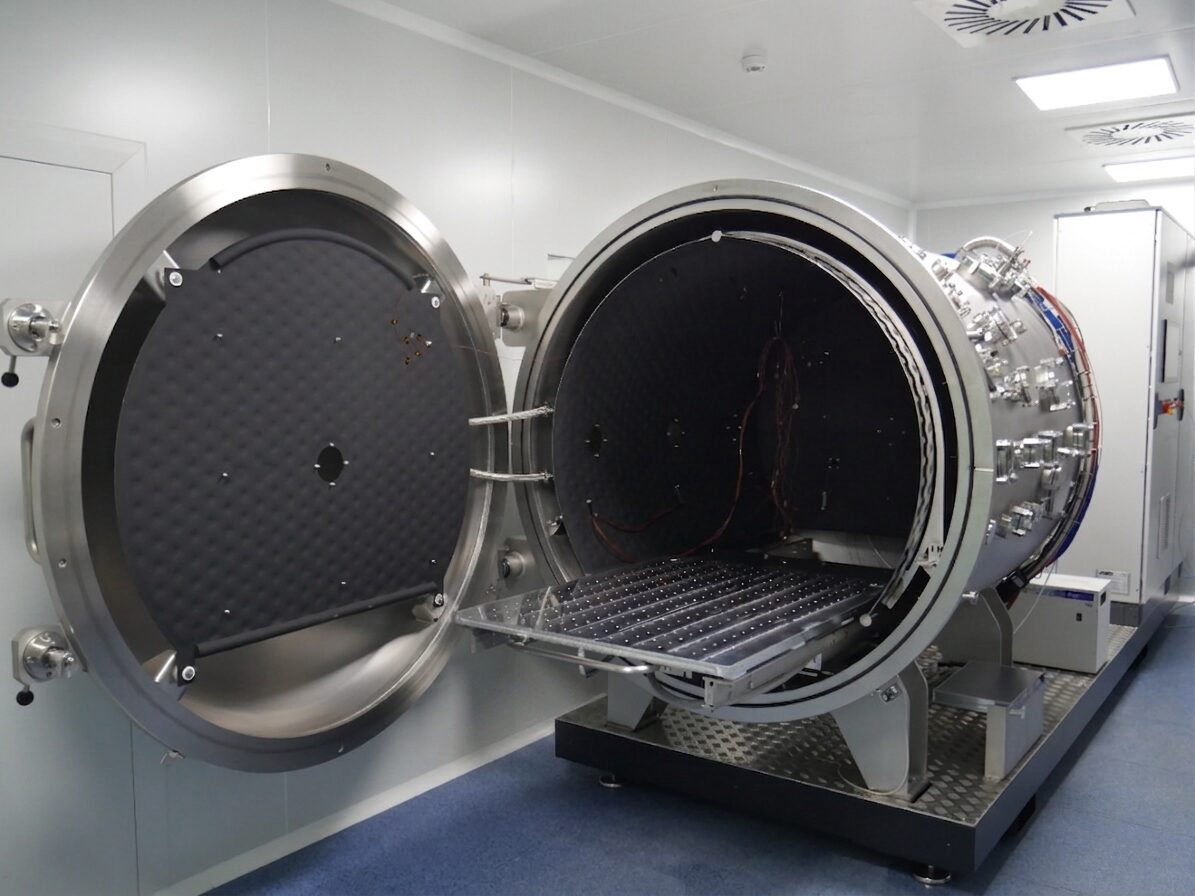
The Institute for Space Studies of Catalonia (IEEC), in collaboration with the Institute for High Energy Physics (IFAE), has commissioned a new thermal vacuum chamber (TVAC). Located at the IFAE facilities on the UAB Campus (Bellaterra, Barcelona), the infrastructure allows testing microsatellites, in-orbit demonstration (IOD) technology demonstrators, and instrumentation under representative space environment conditions.
This infrastructure is geared towards providing services to companies, agencies, and research centers, serving as a strategic tool for the validation of space technologies and the subsequent reduction of risks prior to launch.
Interested parties can contact IEEC for access conditions and booking management at the following email address: spacelabs@ieec.cat.
Infrastructure/equipment
Thermal Vacuum Chamber (TVAC)
Environmental simulation: vacuum and thermal cycling
The TVAC allows reproducing high-vacuum conditions and controlled thermal cycling for environmental testing of space components and subsystems.
System specifications:
Temperature range: between -80 °C and +100 °C
Thermal gradients: up to 1 °C/min
Vacuum level: up to 1×10⁻⁶ mbar, thanks to the dimensioning of the pumping system
Dimensions and testing capacity
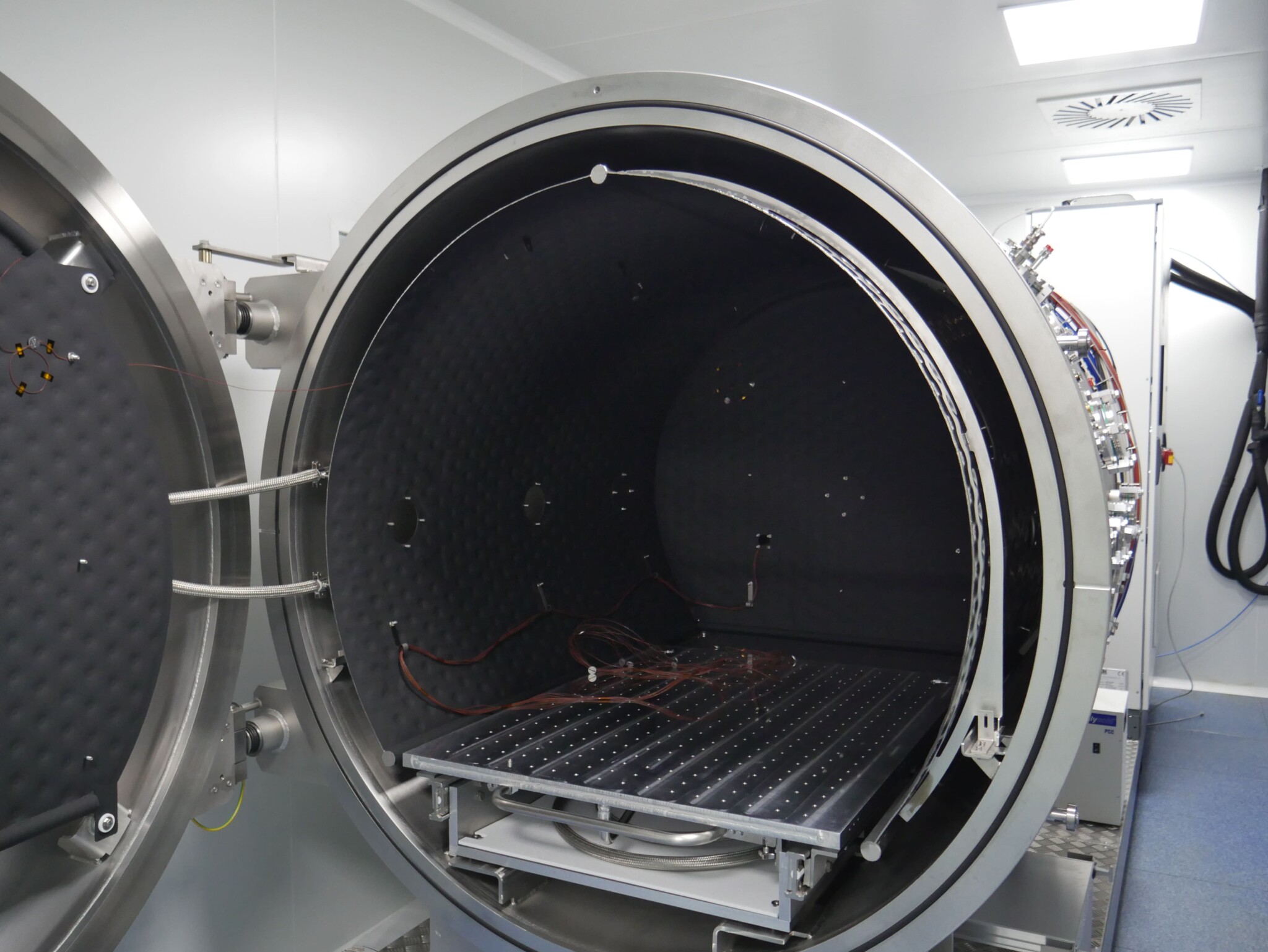
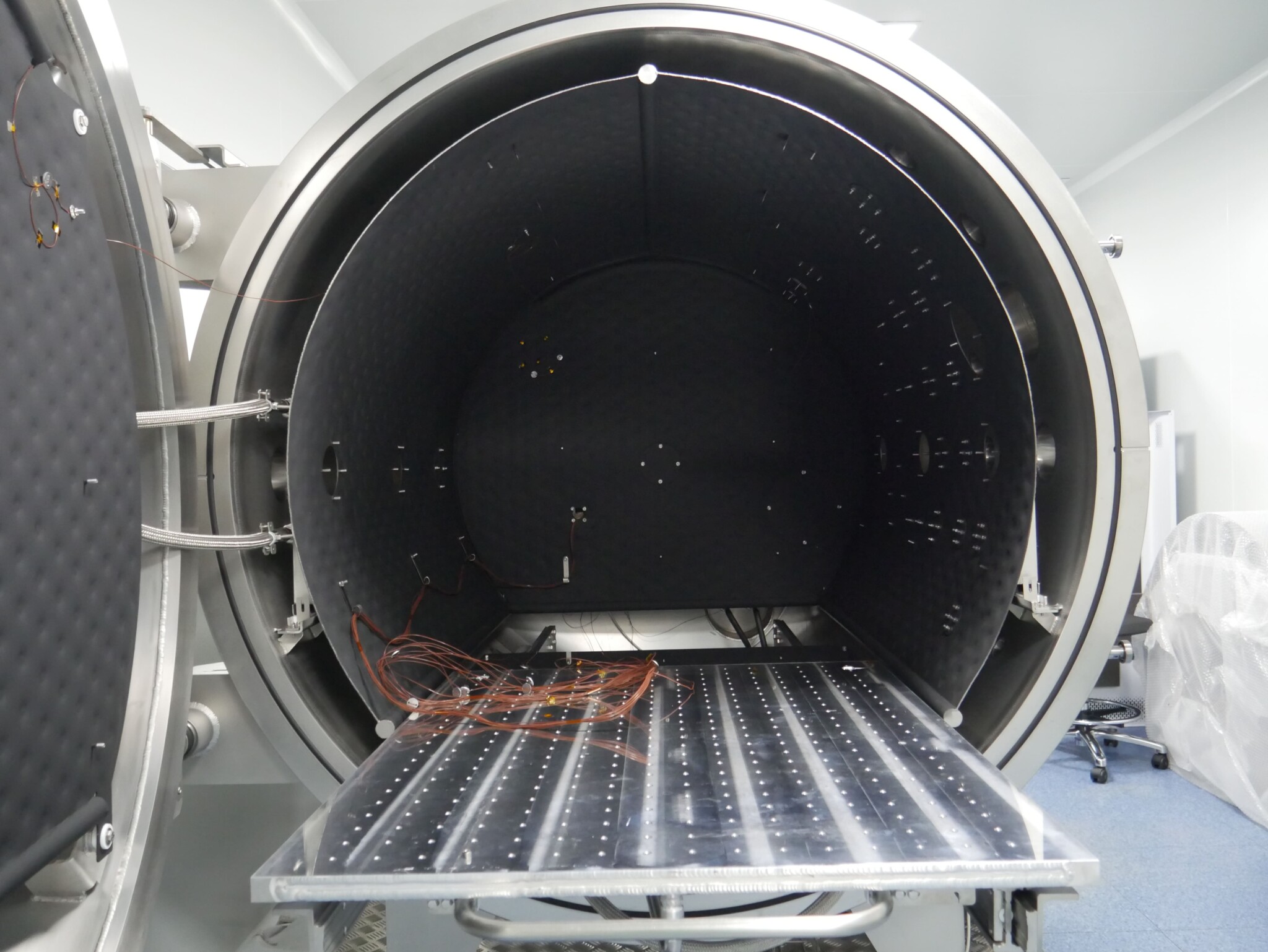
The chamber features an internal volume of 1,500 mm in diameter and 2,200 mm in depth. The system allows for the integration of equipment and test configurations compatible with the following parameters:
Approximate envelope: up to 800 x 1,100 x 800 mm³
Maximum mass: up to 100 kg
Control and instrumentation
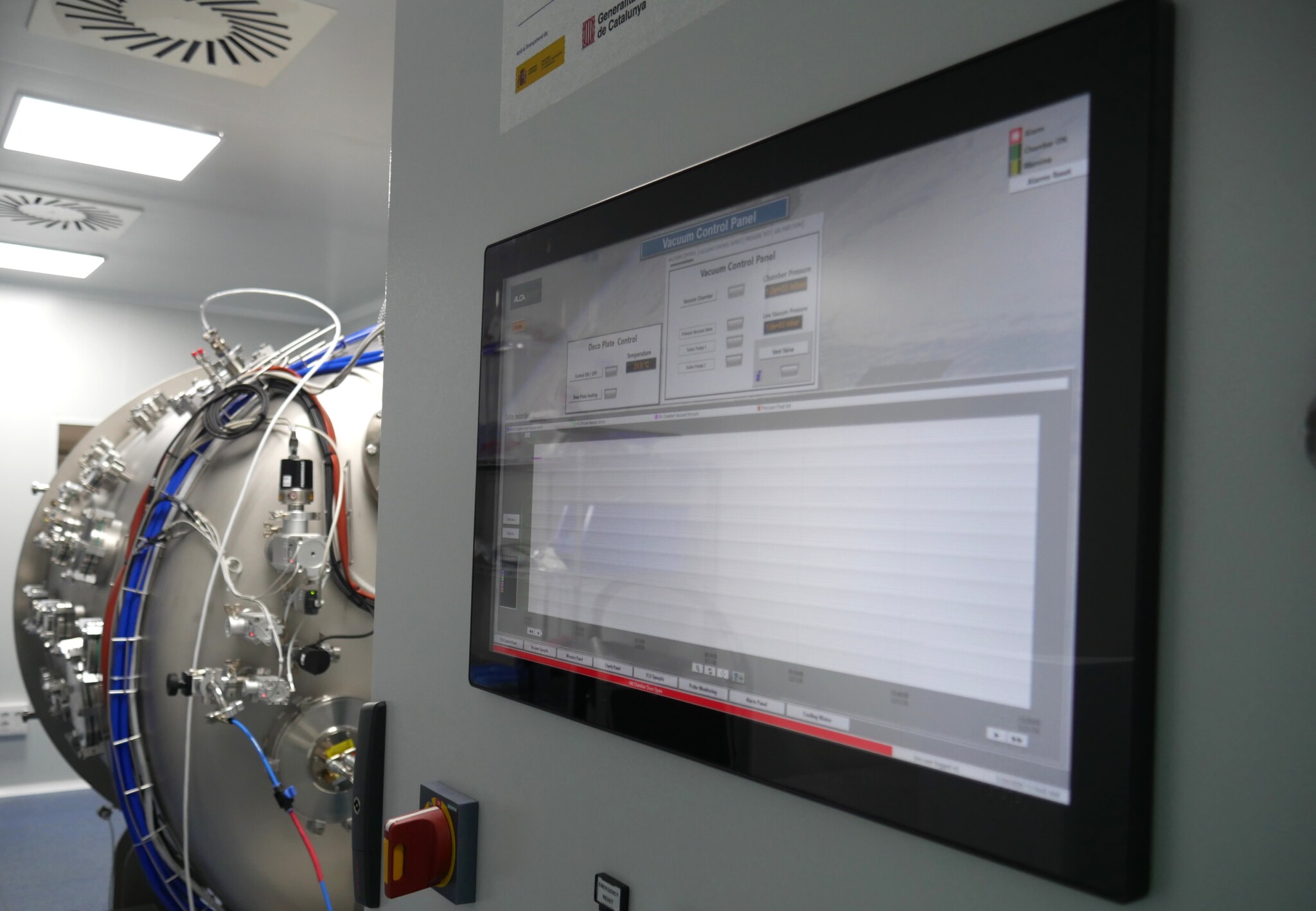
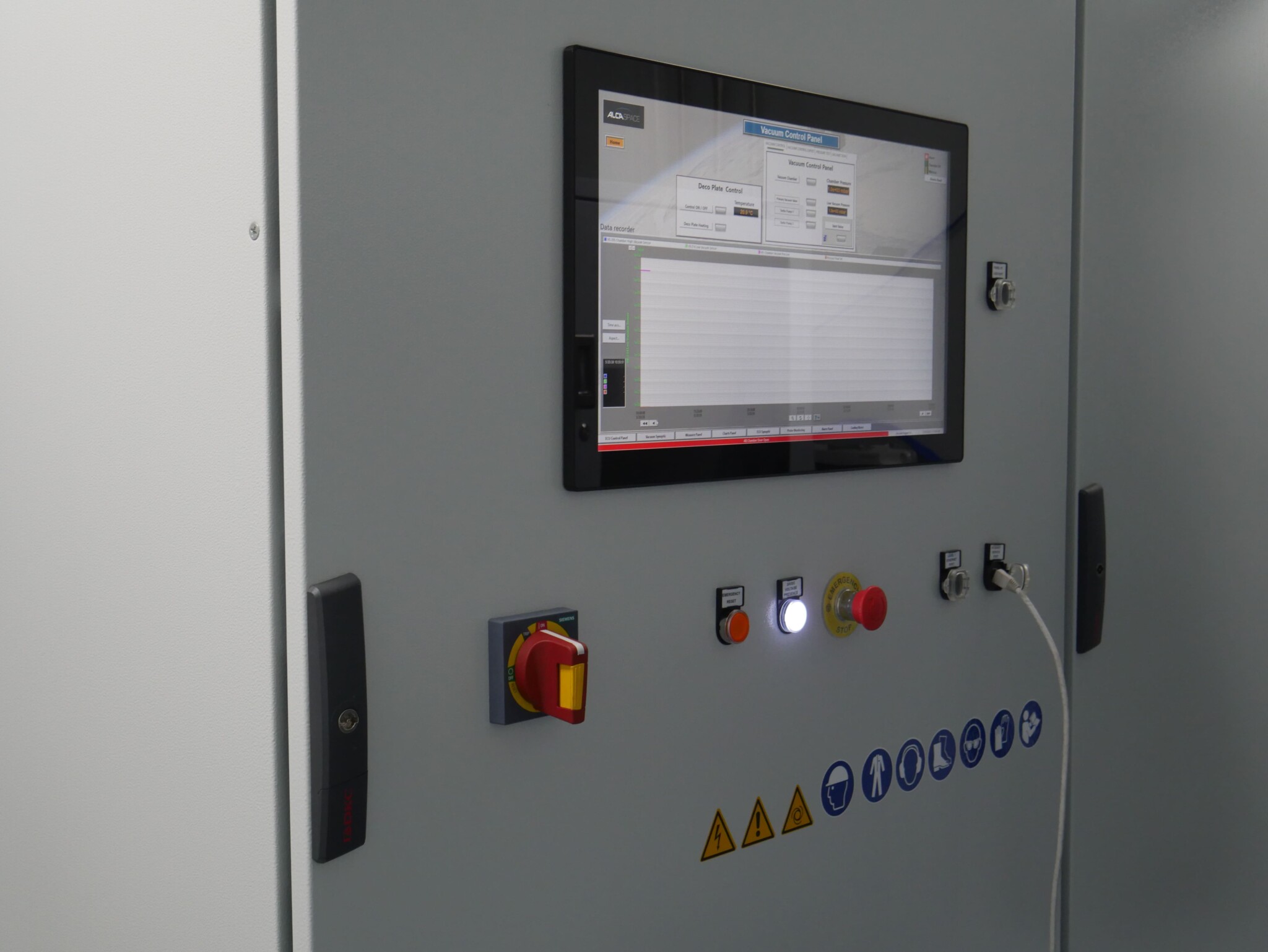
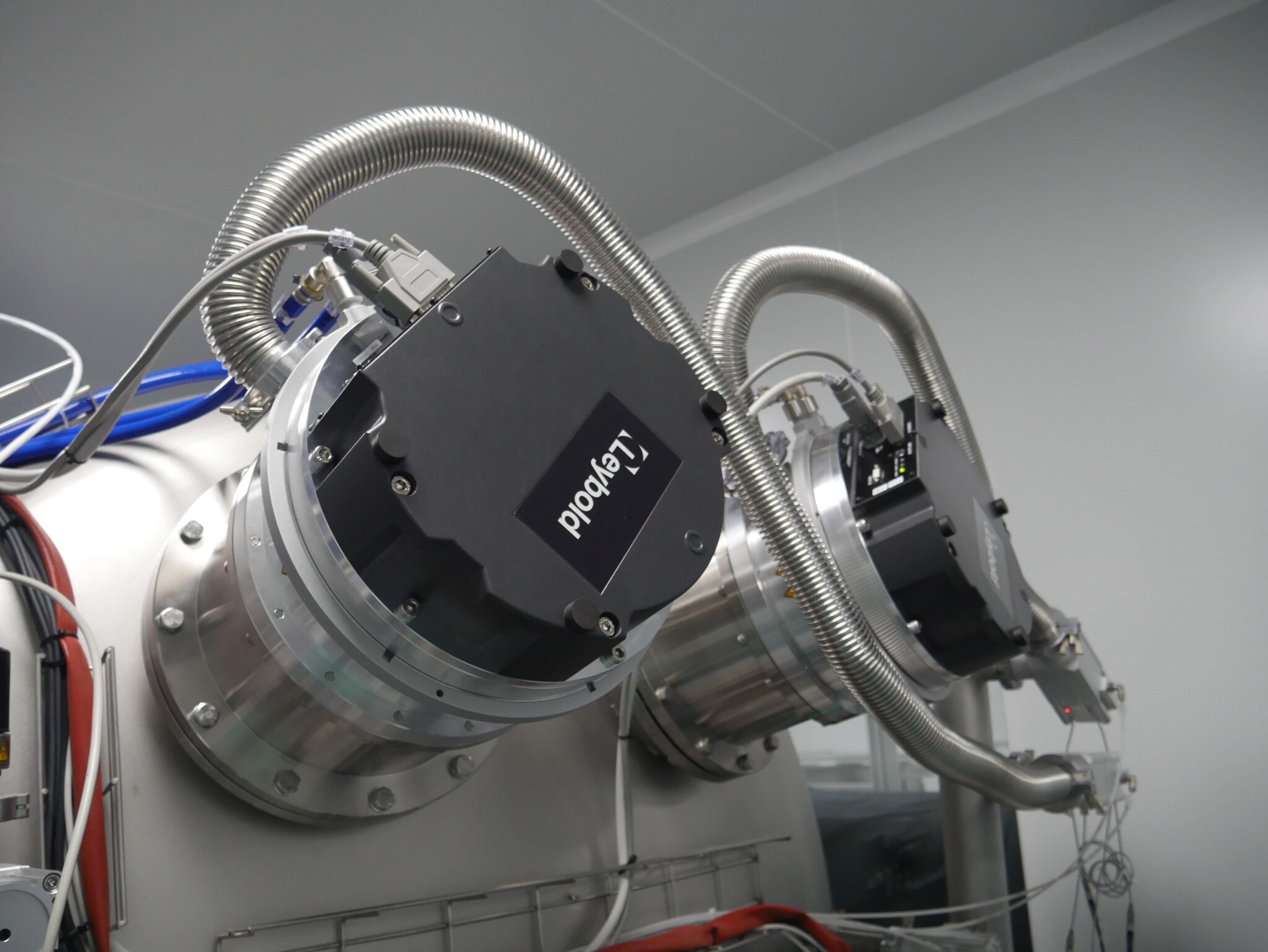
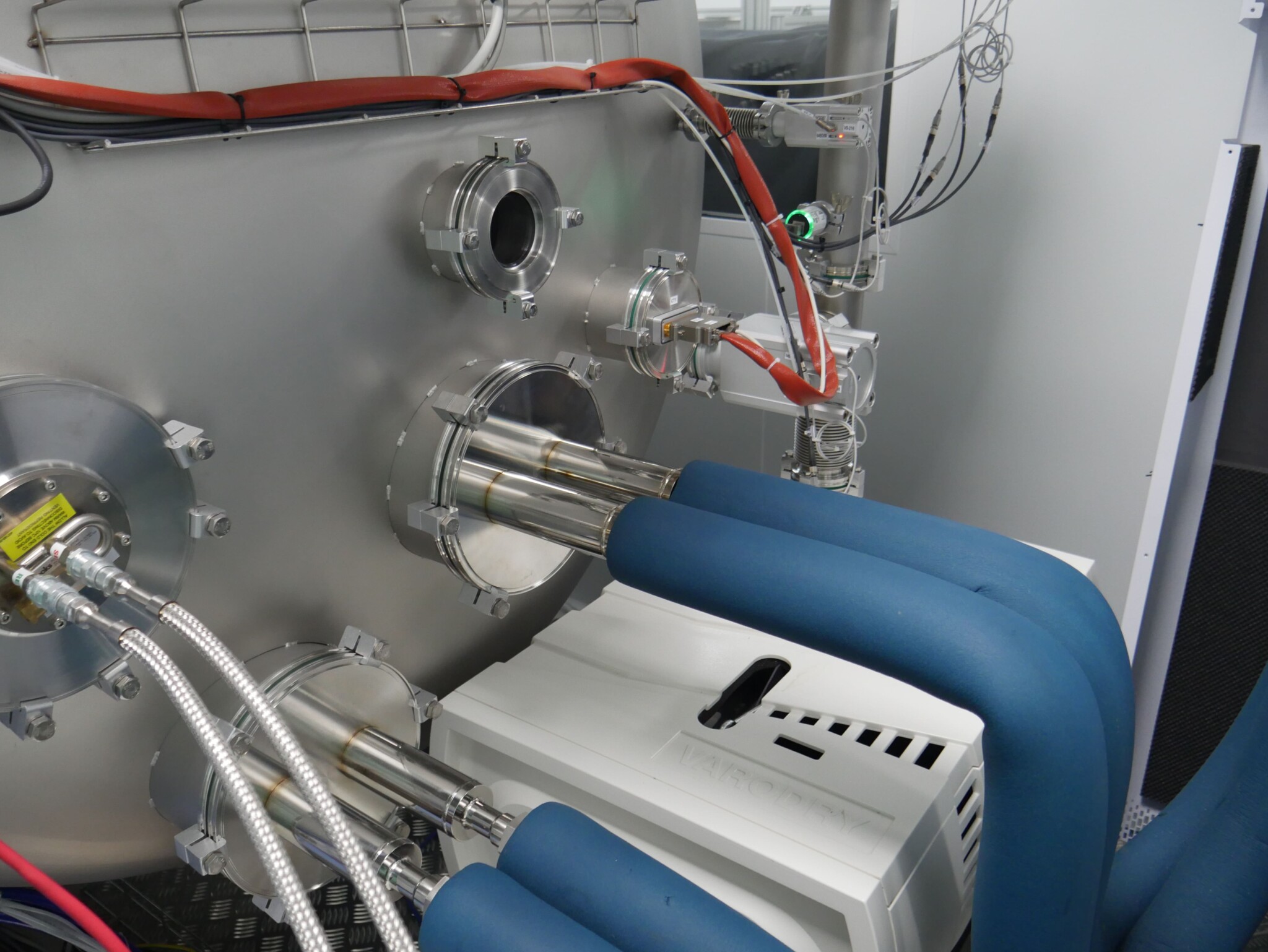
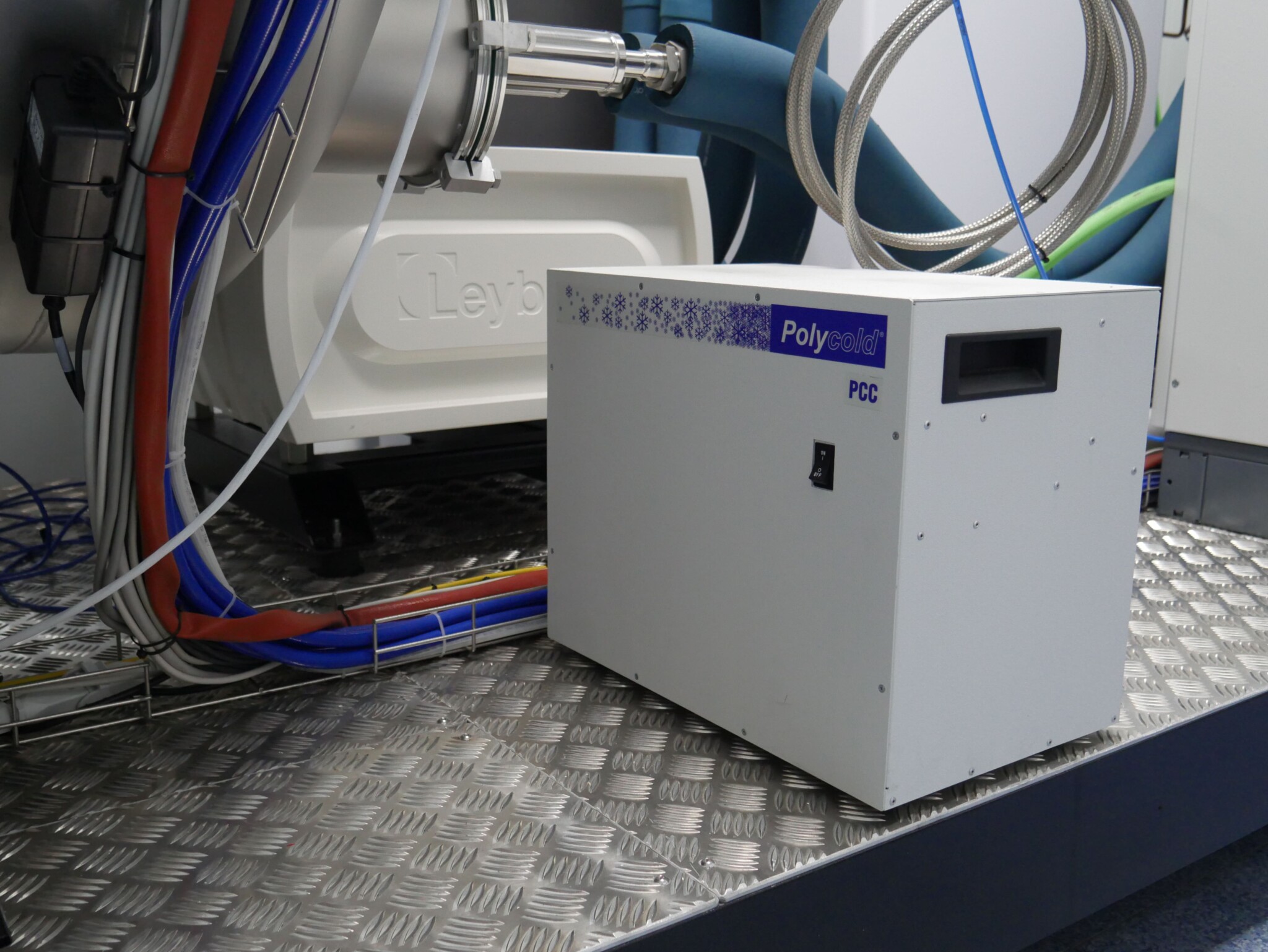
The facility combines a pumping system equipped with a primary pump and two turbomolecular pumps, managed by a PLC, with a thermoregulation system that enables the execution of repeatable and controlled thermal cycles.
Additionally, the infrastructure incorporates characterization and monitoring support equipment, such as a cryogenic cold trap, a residual gas analyzer (RGA), and a quartz crystal microbalance (QCM).
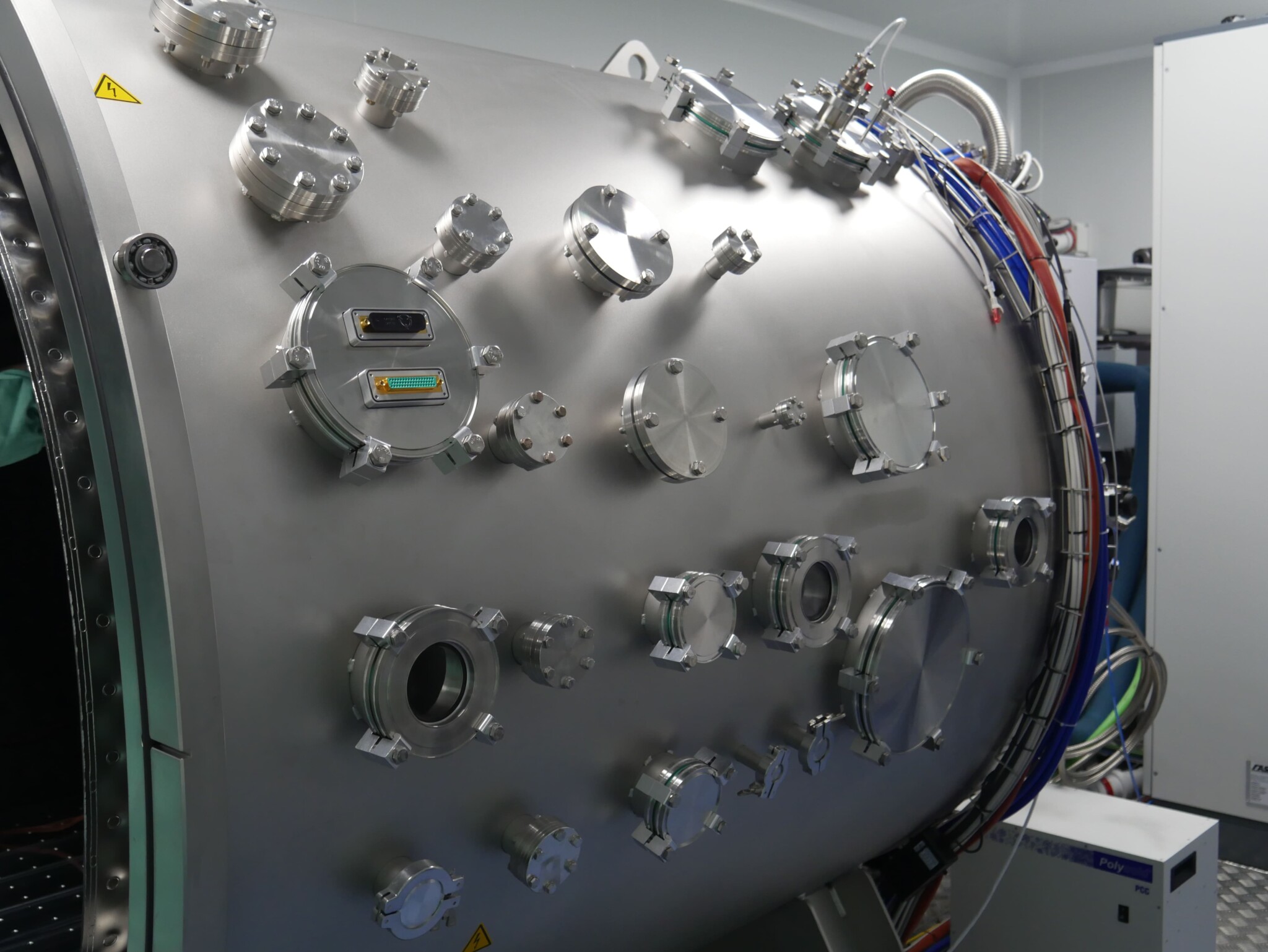
The chamber features configurable ports and connection interfaces for power, instrumentation, and communications. The side panel includes three DN100 ISO-K flanges for user-defined connections, and the system layout includes multi-pin, BNC, SMA, and thermocouple feedthroughs, as well as several spare ports in various DN formats. This allows the configuration to be adapted to the needs of each campaign, subject to prior technical validation.