


The IEEC celebrates its 30th anniversary at an event in Mercat del Born
- The Institute reaches three decades of history consolidated as a benchmark centre for research and innovation in space sciences and technologies, as well as in driving the space ecosystem in Catalonia
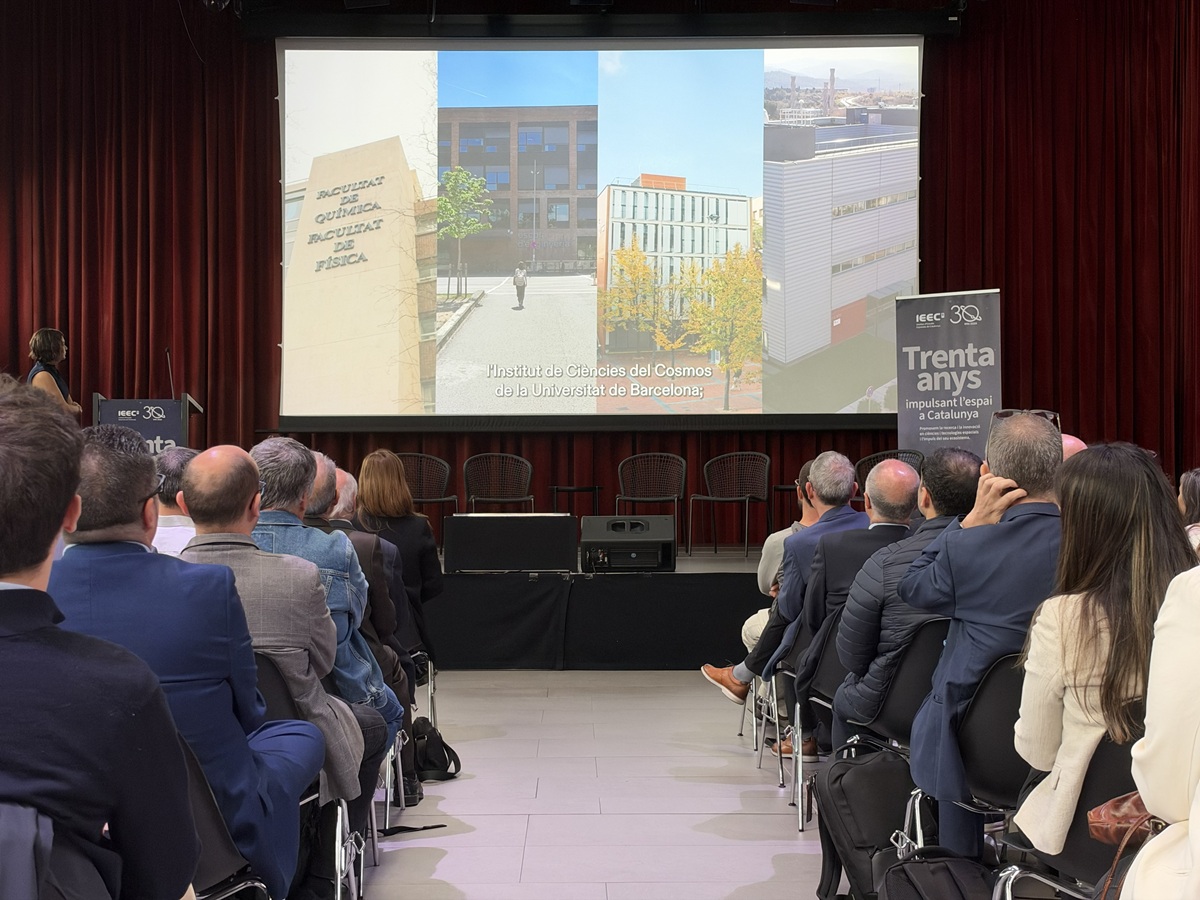
- Sala Moragues at Mercat del Born, in Barcelona, brought together over 100 people from across the space sector
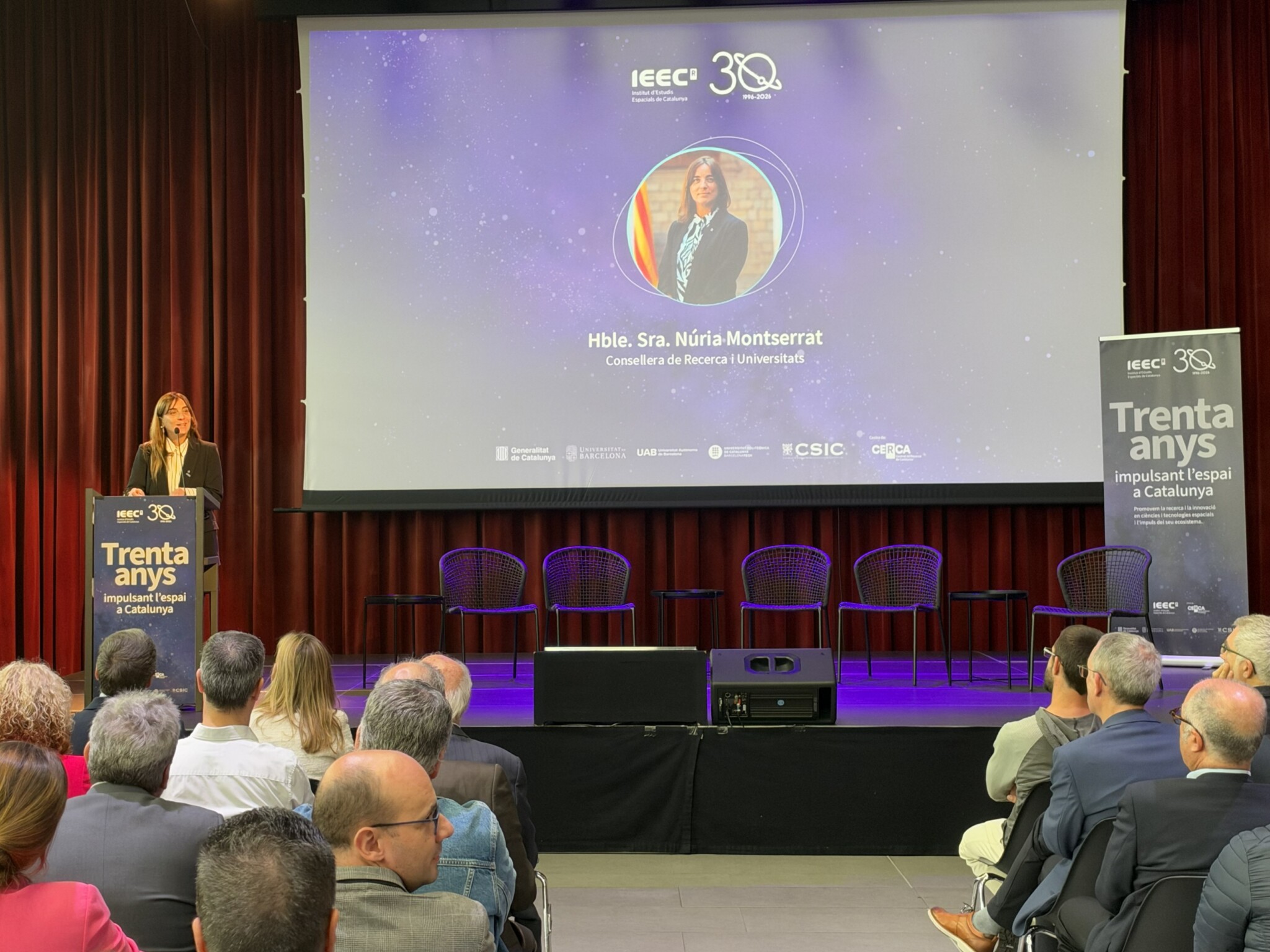
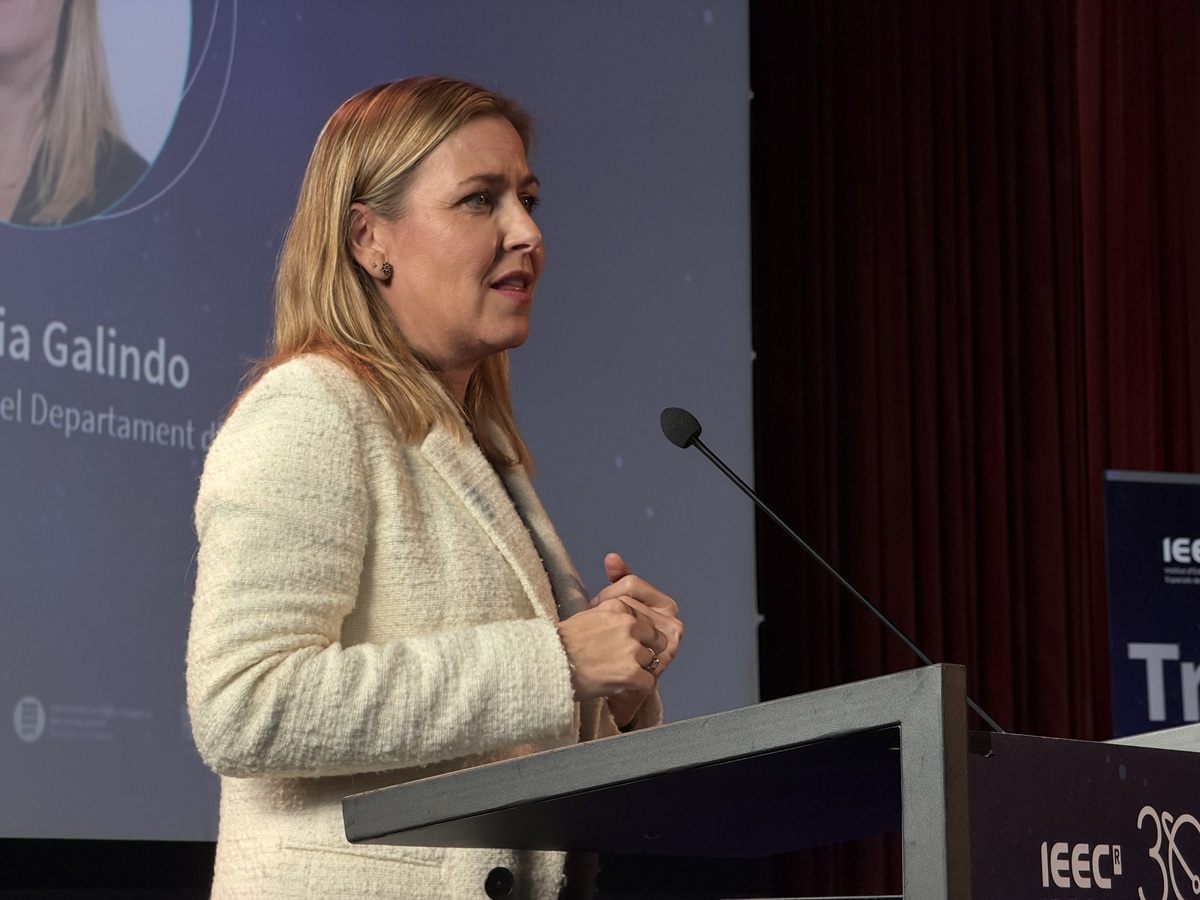
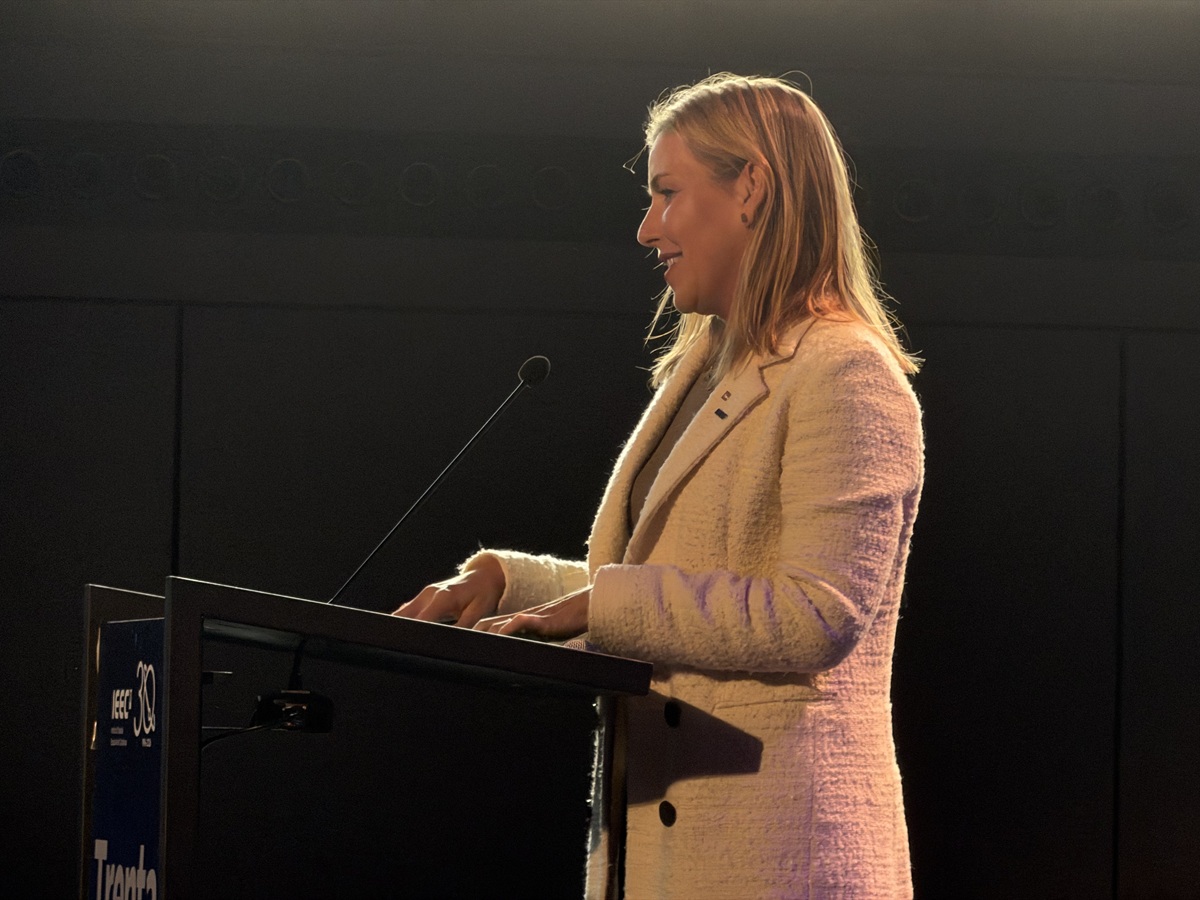
- The event was attended by the Minister for Research and Universities, Núria Montserrat, and the Secretary for Digital Policies of the Ministry of Business and Labour, Maria Galindo

In 2026, the Institute of Space Studies of Catalonia (IEEC) reaches three decades of existence. Founded in 1996 as a non-profit foundation, the Institute has established itself as a benchmark centre for research and innovation in space sciences and technologies. It also acts as the main driver and international representative of Catalonia’s space sector within the framework of the Catalonia Space 2030 Strategy, promoted by the Government of Catalonia.
Today, Sala Moragues at Mercat del Born in Barcelona hosted the celebration event to mark the 30th anniversary of the Institute. The event gathered more than 100 guests, including representatives from the Government of Catalonia and public administrations, such as the Minister for Research and Universities—who is also president of the IEEC board of trustees—, Núria Montserrat; the mayor of Sant Esteve de la Sarga, Jordi Navarra; and the Secretary for Digital Policies of the Ministry of Business and Labour, Maria Galindo. Prominent institutional figures in the space sector also attended, including Xavier Benedicto, Advisor to the Directorate General for Resilience and Security at the European Space Agency (ESA).
The event also counted on the presence of the director general of Research, Teresa Sanchis, alongside other representatives from academia and industry, as well as research, technical, and management staff from the IEEC.
An overview of the IEEC and the space sector
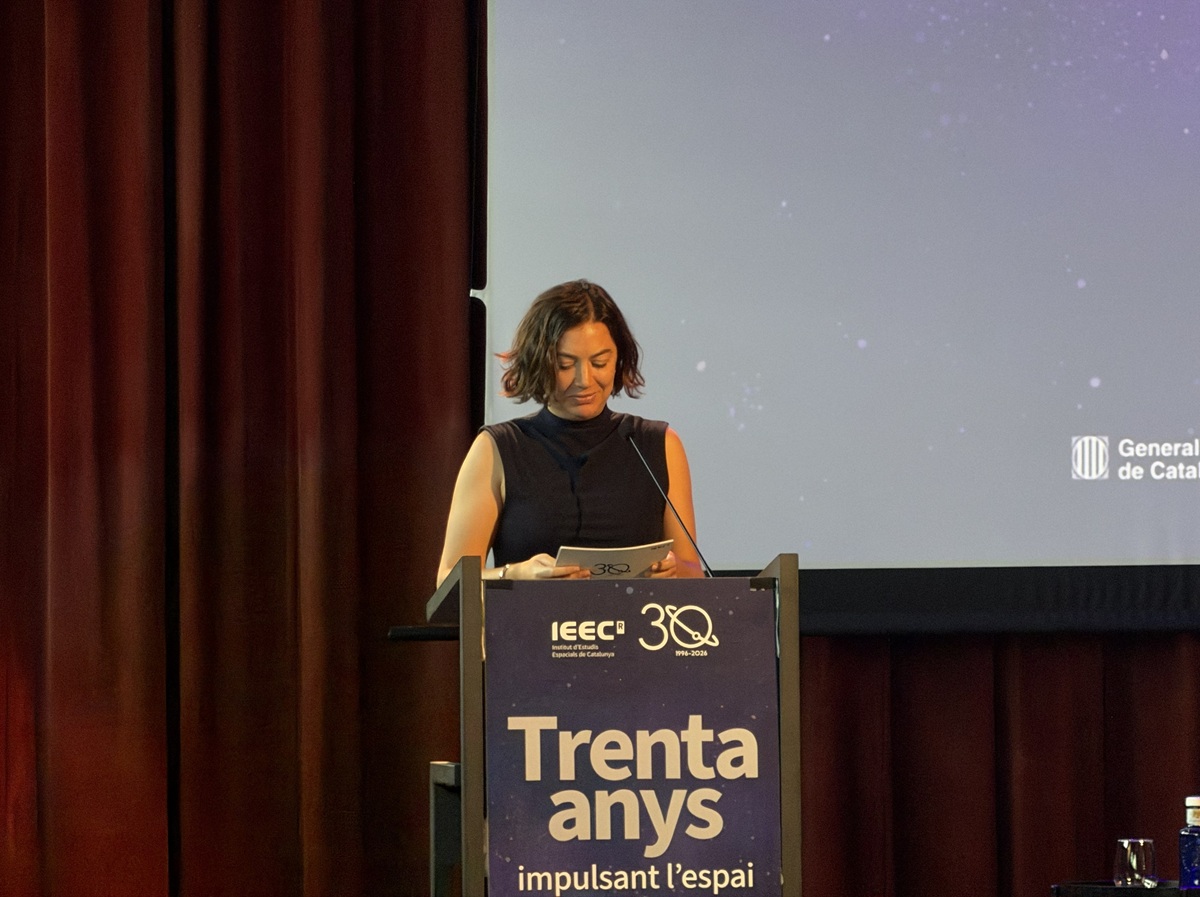
The celebration event for the IEEC’s 30th anniversary, conducted by Ana Montaner, head of Communication of the Institute, highlighted both the IEEC’s role as a research and innovation centre and its work in promoting Catalonia’s space sector, acting as the driving entity representing the sector under the Catalonia Space 2030 Strategy.
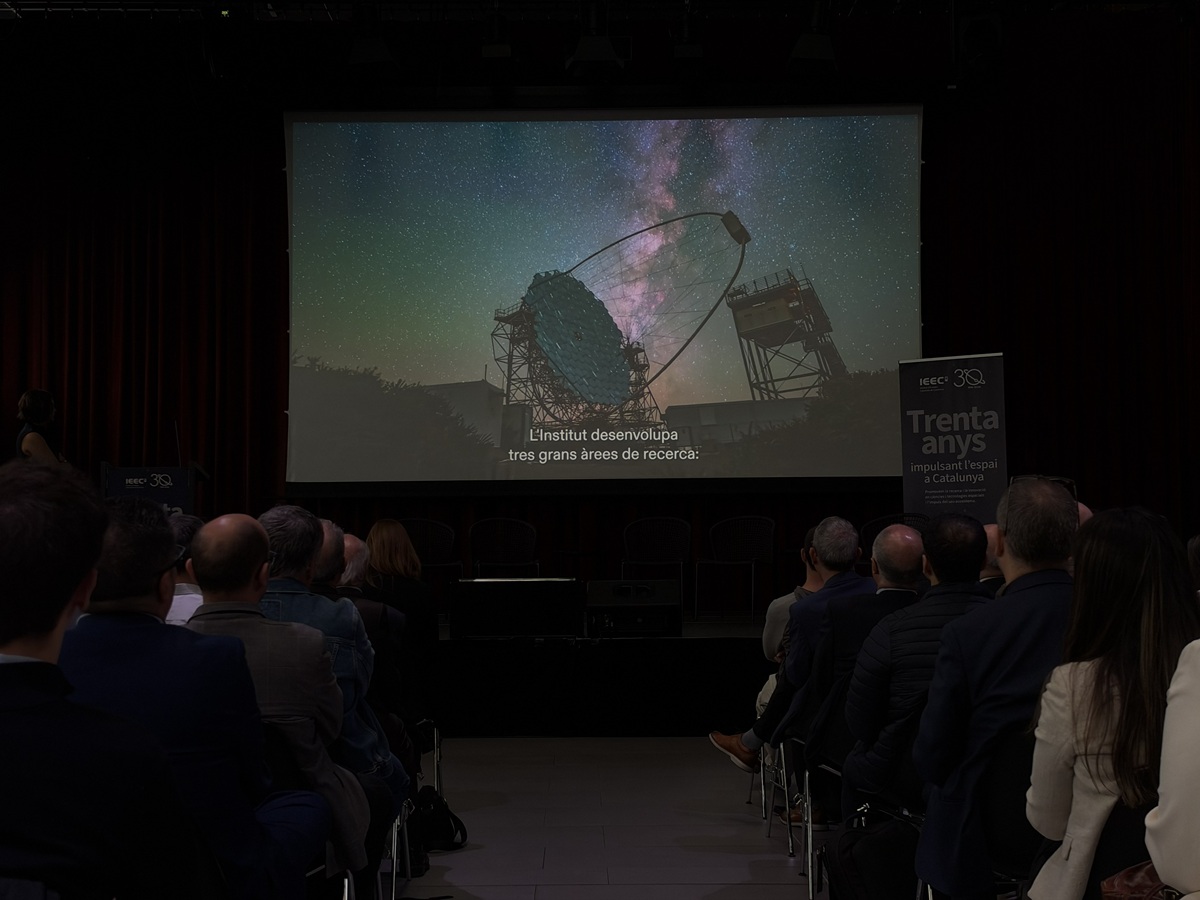
On the one hand, the IEEC focuses its efforts on studying the cosmos and Earth as a planet through a robust research, development, and innovation (R&D&I) programme within scientific missions and projects. The Institute participates in and holds high-level responsibilities across multiple space missions and ground-based instrumentation facilities. Research lines developed at the IEEC cover three major domains: astrophysics and cosmology, Earth observation and navigation, and space technology.
On the other hand, the Institute contributes to strengthening the Catalan space ecosystem by launching satellite missions, developing innovation and industrial growth programmes, fostering talent, and driving high-value services based on space technologies. In this regard, the IEEC promotes the internationalisation of the sector, aiming to expand industrial capabilities and international collaboration while maintaining a firm commitment to social responsibility.
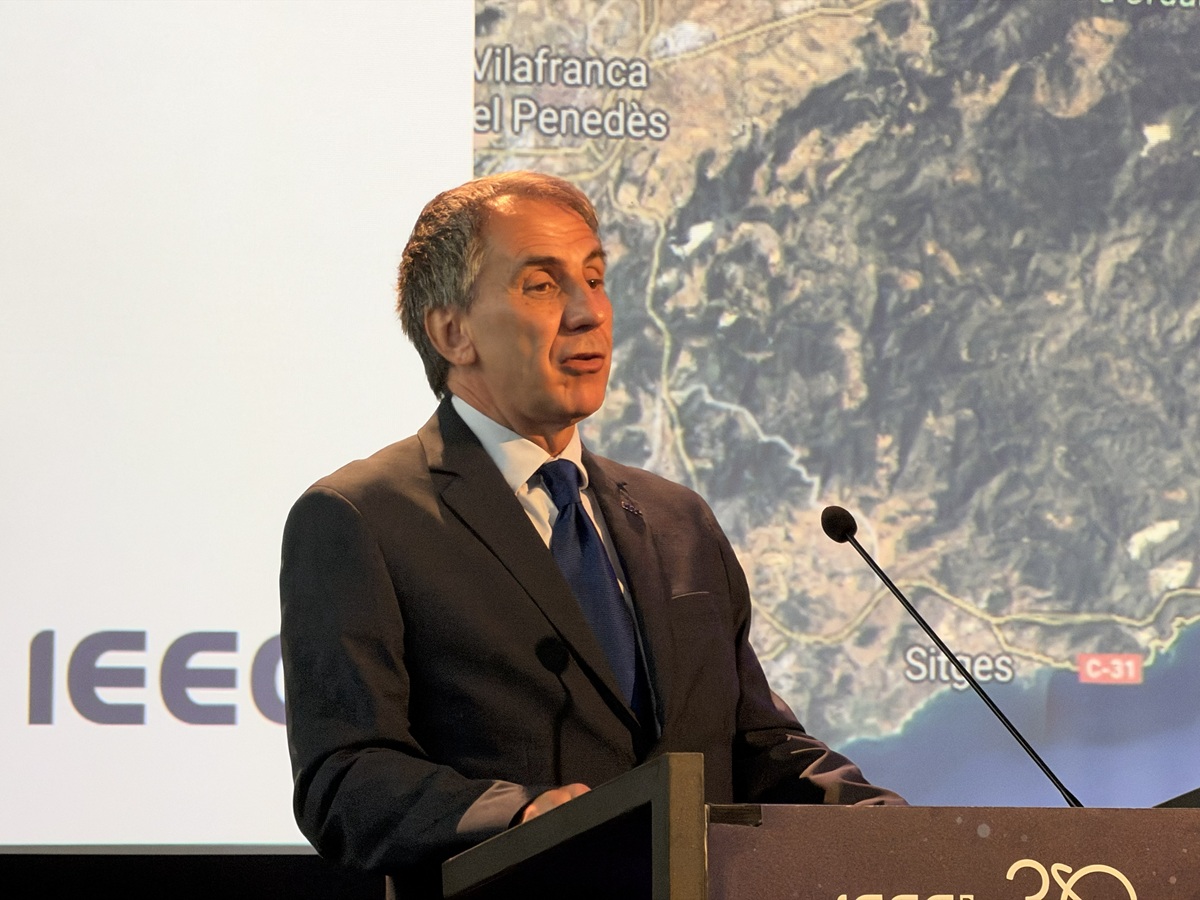
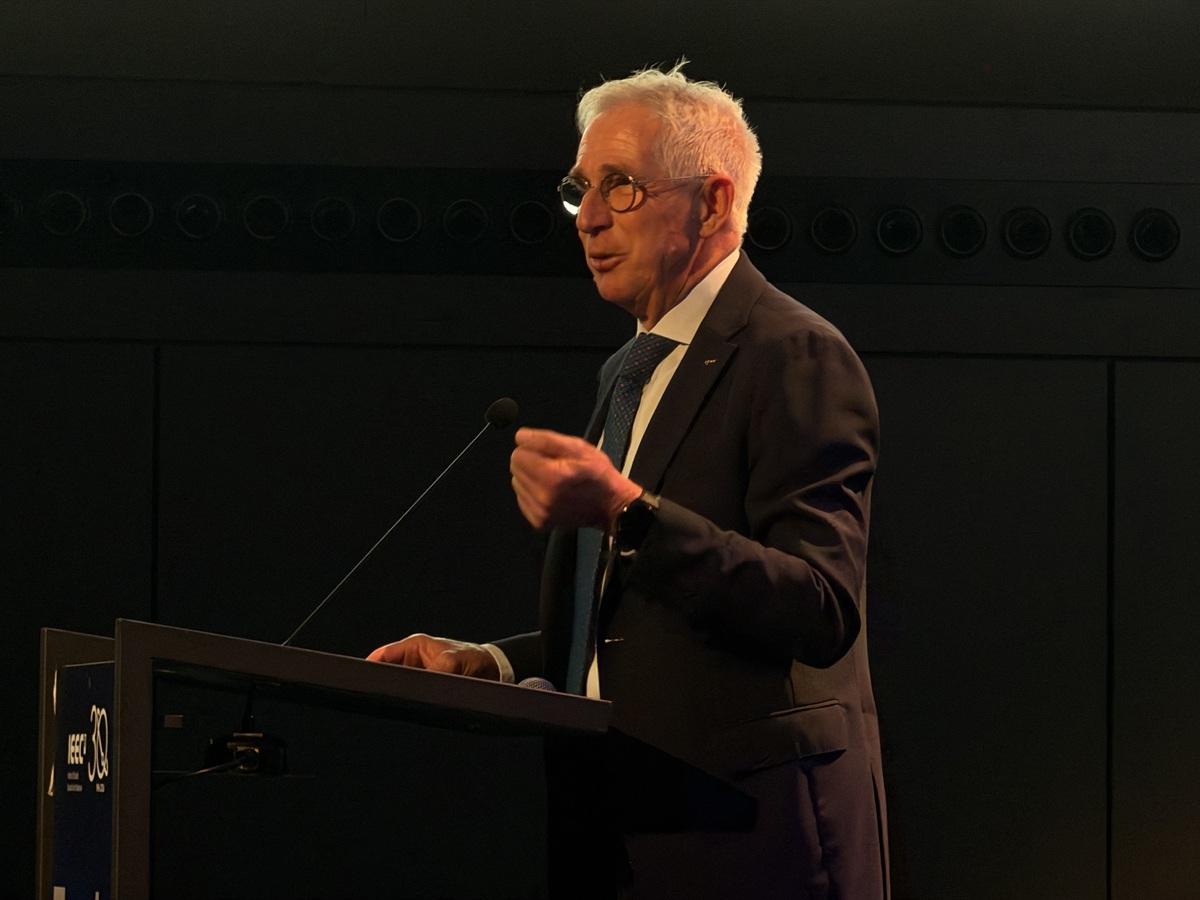
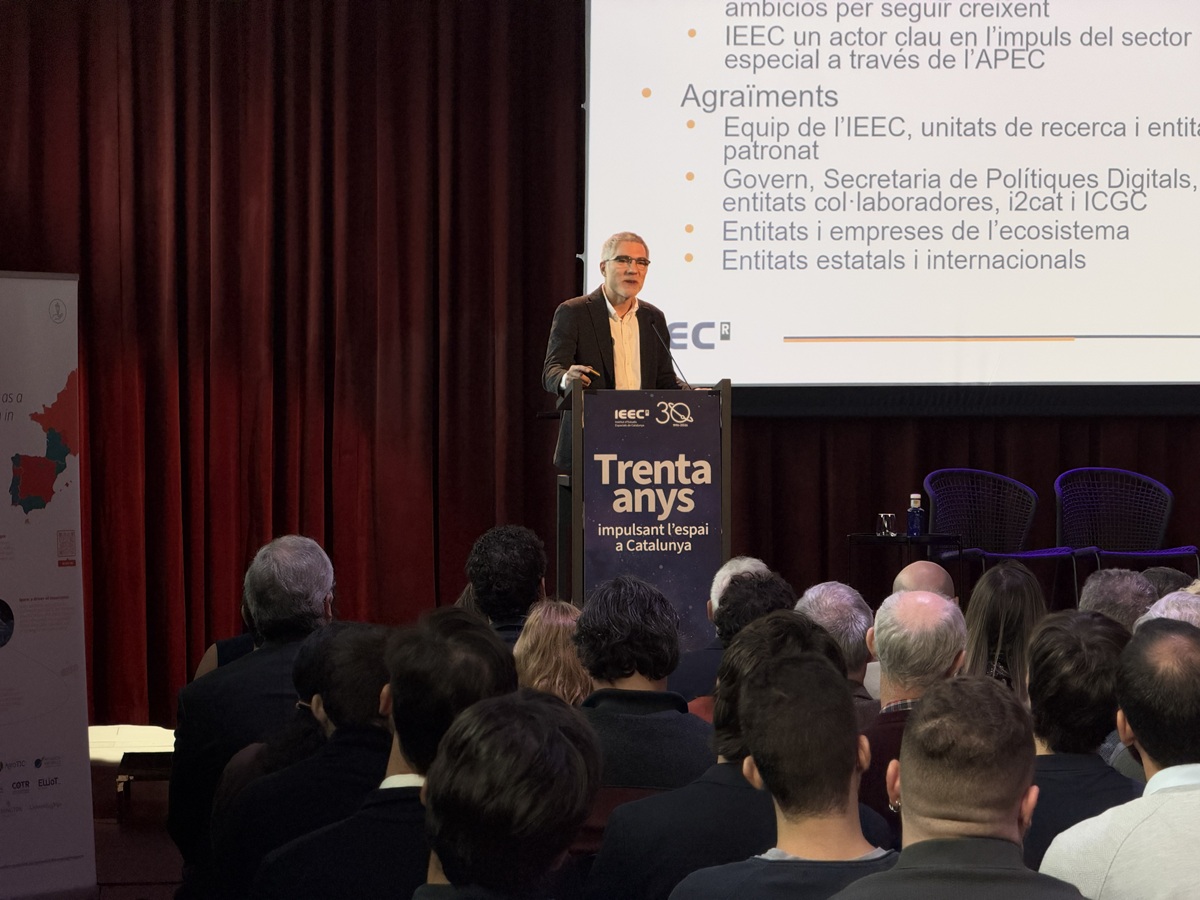
During his address, Xavier Luri, director of the IEEC, reviewed the Institute’s trajectory from its inception to the present day, as well as its medium-term horizon. The remarkable growth experienced by the IEEC in recent years is reflected across all key metrics. By way of example in research output, while the research team published 30 articles in peer-reviewed journals in 2000, that figure exceeded 642 articles by 2025.


For his part, Xavier Benedicto outlined the evolution of the space sector in the world, with a special focus in Europe, where public budgets reached €13.5 billion in 2025 (a 12% increase year-on-year).
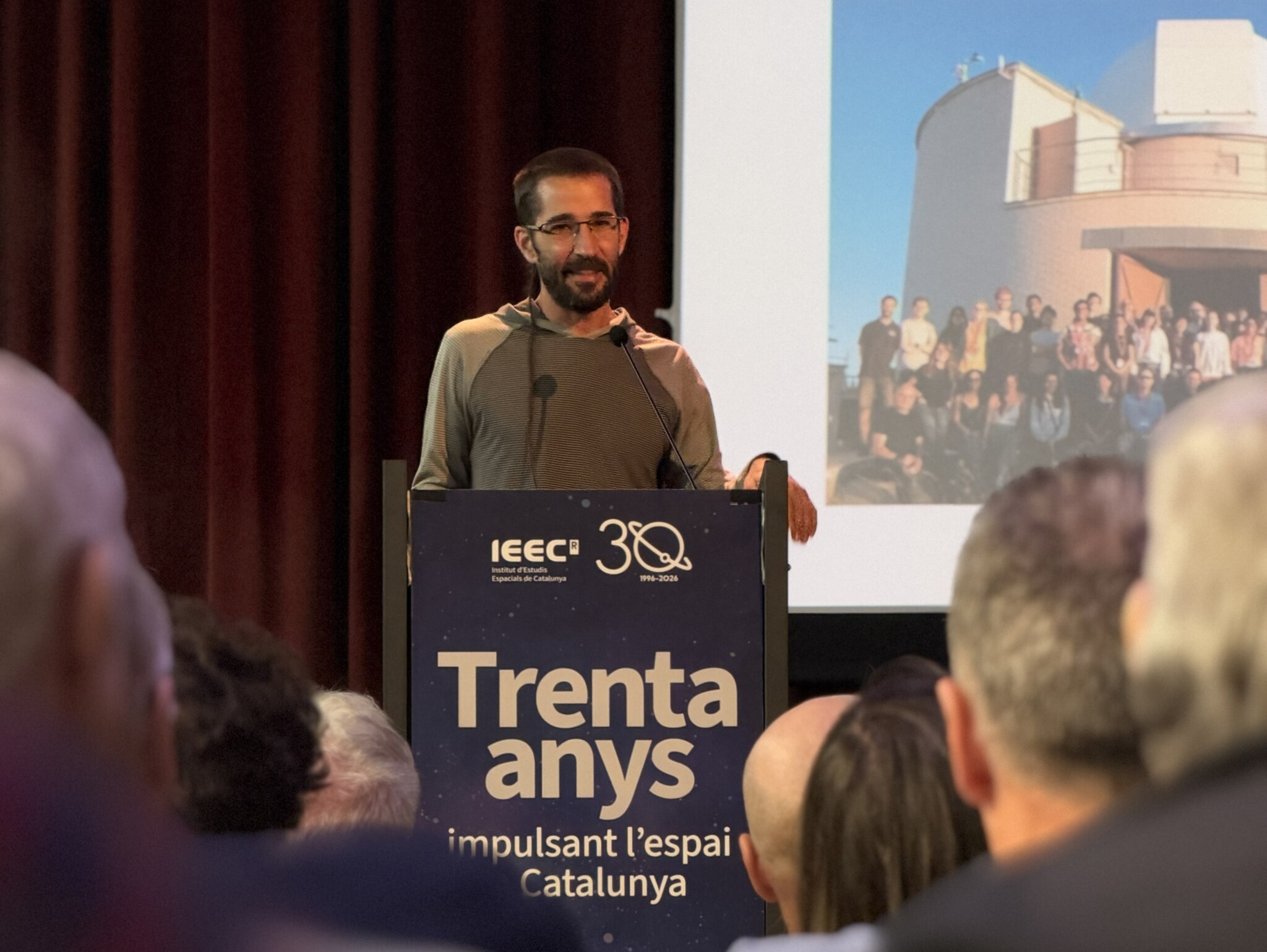
In turn, Josep Colomé, director of the Area for the Promotion of the Space Sector of Catalonia (APEC) at the IEEC, detailed initiatives to boost the Catalan space ecosystem. These include the creation of infrastructure (Sant Esteve Teleport, rocket engine test bench), the coordination of programmes such as ESA Phi-Lab Spain, and an international presence at key industry events like the International Astronautical Congress (IAC) or Space Tech Expo Europe, held annually in Bremen (Germany). Furthermore, Kike Herrero, director of the Montsec Observatory, highlighted the project for the new Jordi Torra Telescope, featuring a 2.5-metre mirror and an investment exceeding €20 million, aiming to become one of the world’s largest robotic telescopes by 2030.
The event also featured multi-voice formats that once again illustrated the two main pillars of the IEEC’s activity.
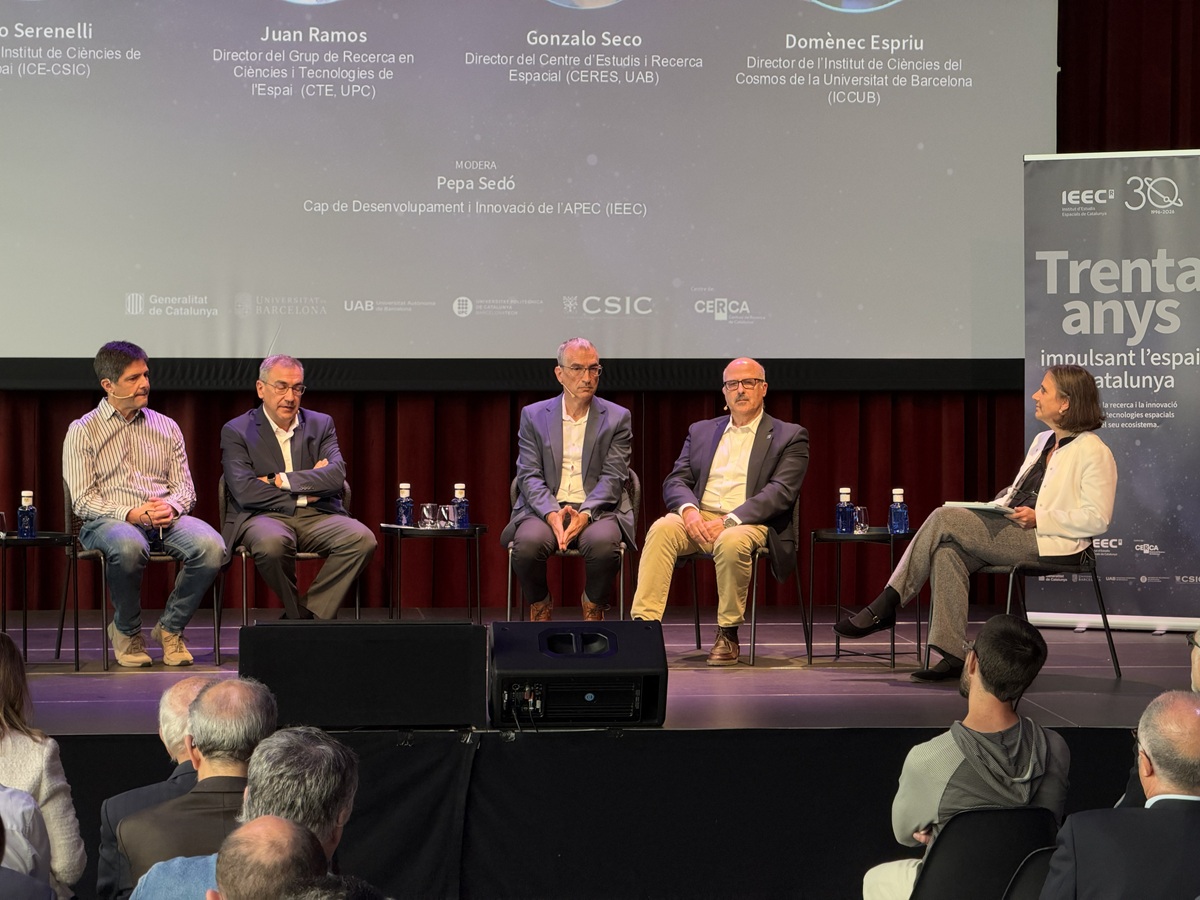
On the one hand, a round table focused on research from an IEEC perspective was held, moderated by Pepa Sedó, head of the IEEC Development and Innovation Office, with contributions from the directors of the Institute’s various research units:
- Domènec Espriu, from the Institute of Cosmos Sciences of the Universitat de Barcelona (ICCUB)
- Gonzalo Seco, from the Centre of Space Studies and Research of the Universitat Autònoma de Barcelona (CERES, UAB)
- Juan Ramos, from the group of Space Sciences and Technologies of the Universitat Politècnica de Catalunya – BarcelonaTech (CTE, UPC)
- Aldo Serenelli, from the Institute of Space Sciences (ICE-CSIC)
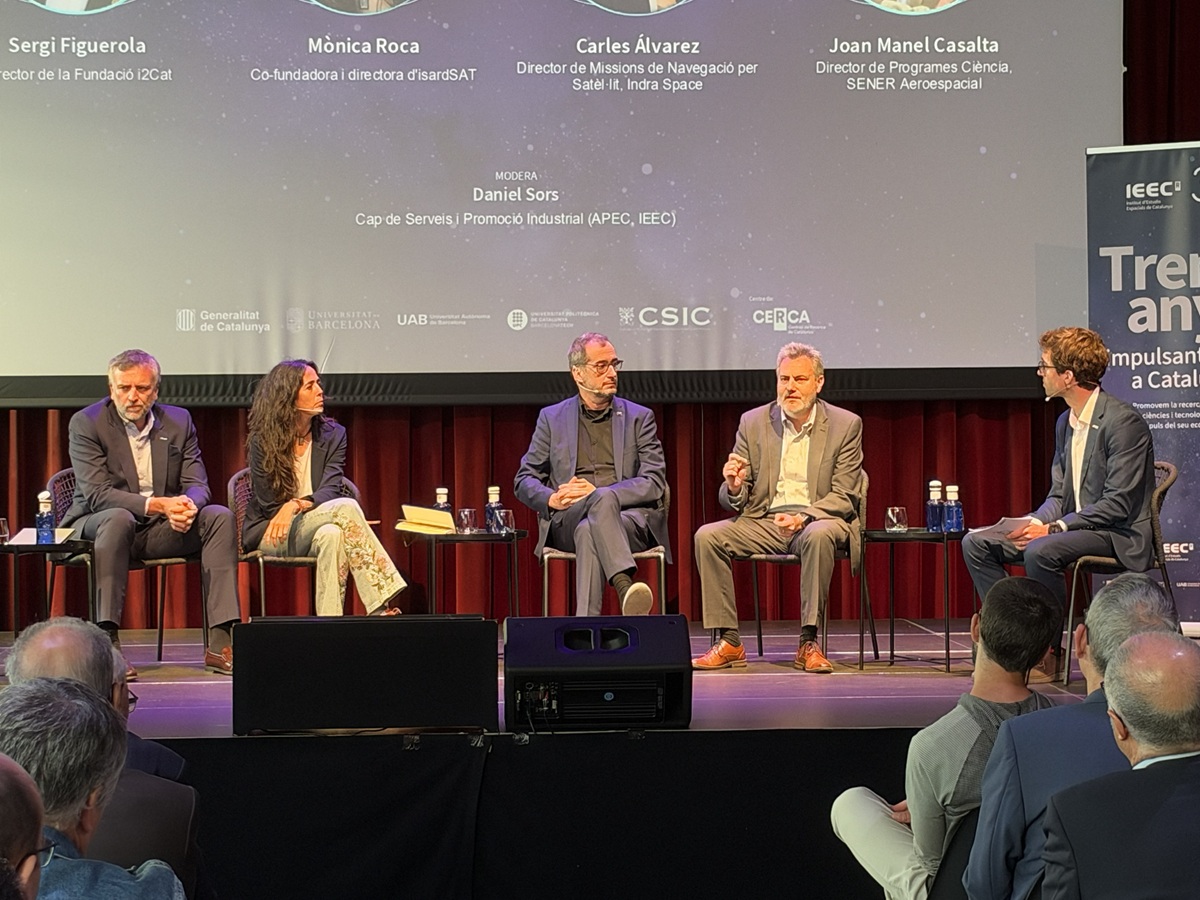
On the other hand, the programme concluded with a round table on the Catalan space ecosystem, moderated by Daniel Sors, head of the IEEC Services and Industrial Promotion Office. Dedicated to industrial strategy, technology transfer, and industry needs and opportunities, the panel featured representatives from leading companies:
- Sergi Figuerola, director of the i2CAT research and innovation centre
- Mònica Roca, general manager of isardSAT
- Carlos Álvarez, director of navigation missions at INDRA
- Joan Manel Casalta, director of science programmes at SENER Aeroespacial
Image gallery
Contacts
IEEC Communication Office
Castelldefels, Barcelona
E-mail: comunicacio@ieec.cat
About the IEEC
The Institute of Space Studies of Catalonia (IEEC — Institut d’Estudis Espacials de Catalunya) promotes and coordinates space research and technology development in Catalonia for the benefit of society. IEEC fosters collaborations both locally and worldwide and is an efficient agent of knowledge, innovation and technology transfer. As a result of 30 years of high-quality research, done in collaboration with major international organisations, IEEC ranks among the best international research centres, focusing on areas such as: astrophysics, cosmology, planetary science, and Earth Observation. IEEC’s engineering division develops instrumentation for ground- and space-based projects, and has extensive experience in working with private or public organisations from the aerospace and other innovation sectors.
The IEEC is a non-profit public sector foundation that was established in February 1996. It has a Board of Trustees composed of the Generalitat de Catalunya, Universitat de Barcelona (UB), Universitat Autònoma de Barcelona (UAB), Universitat Politècnica de Catalunya · BarcelonaTech (UPC), and the Spanish Research Council (CSIC). The IEEC is also a CERCA centre.