


Minister Montserrat presents the project for the new large telescope at the Montsec Observatory
- The new telescope will involve an investment of over €20 million and will boost the research and innovation capabilities of the scientific infrastructure in Lleida
- With a 2.5-metre diameter mirror, it will become one of the world’s largest robotic telescopes when it becomes operational in 2030
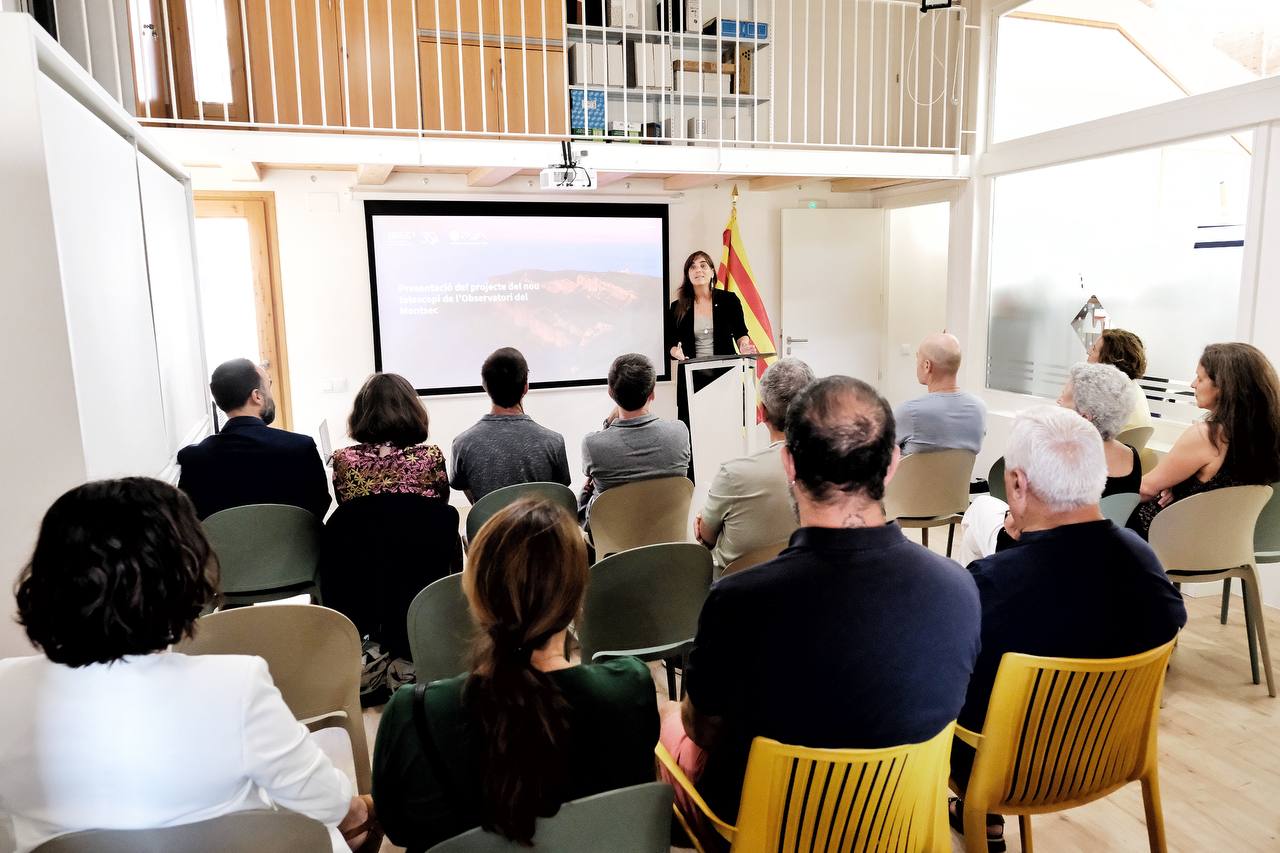
- It has been presented by the Minister for Research and Universities, Núria Montserrat, at the Sant Esteve de la Sarga Town Hall

The Minister for Research and Universities, Núria Montserrat, presented this morning the project for the new telescope at the Montsec Observatory (OdM), which will involve an investment of over €20 million and will become one of the world’s largest robotic telescopes when it enters into service in 2030.
The OdM is an infrastructure dedicated to astronomical research and atmospheric measurements managed by the Institute of Space Studies of Catalonia (IEEC), which also features the Sant Esteve Teleport, a facility equipped for satellite operations with the capacity to host industrial activity from the space sector.
The telescope, featuring a 2.5-metre diameter mirror, will be primarily dedicated to research in the field of time-domain astrophysics. This infrastructure, which will be open to the entire scientific community, will be crucial for identifying the nature, physical properties (such as temperature or composition) and the temporal evolution of both galactic and extragalactic phenomena.
Among the potential scientific goals of the project are the study of dark matter and dark energy, quasar physics and the measurement of the Hubble constant using gravitational lensing. Furthermore, it will allow for the rapid follow-up of transient phenomena such as supernovae, kilonovae and radio bursts, the analysis of electromagnetic counterparts of gravitational waves, the study of exoplanet habitability in M dwarfs and the investigation of accretion phenomena in binary compact objects.
Presentation at Sant Esteve de la Sarga
The presentation event took place at the Sant Esteve de la Sarga Town Hall, in Pallars Jussà, where the Observatory is located. During the event, Minister Montserrat highlighted that “the project will make it possible to bring into operation an instrument and complementary instrumentation that are essential to achieving an important role in the different fields of time-domain astrophysics, ensuring that Catalan astronomy remains a key player on the international stage”.
The head of the Ministry of Research and Universities also emphasised that “the future facility will also enable new synergies to be created between Catalan researchers and all the multiband astronomical survey and search projects of the coming decades, even those that do not formally include Catalonia as a collaborative member”.
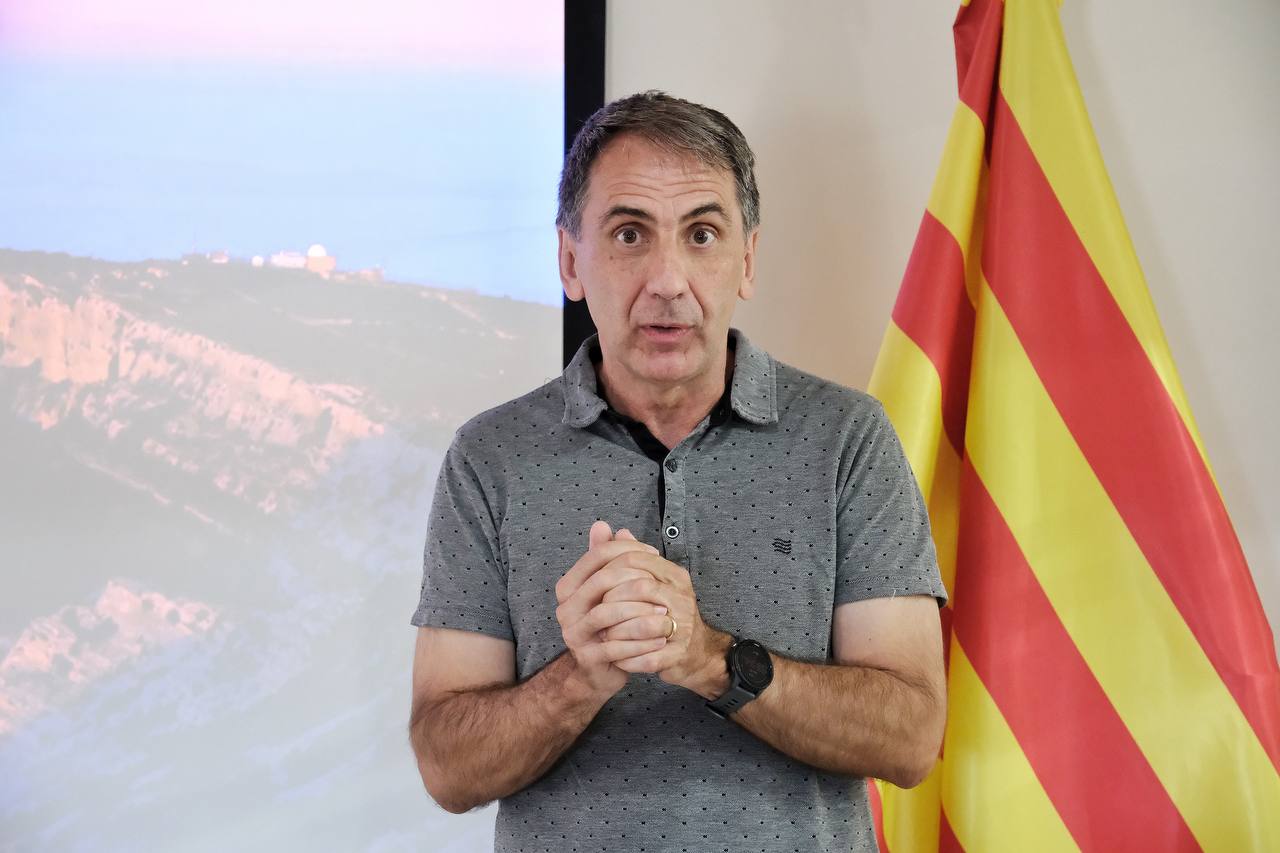
For his part, the director of the IEEC, Xavier Luri, stressed that “given the characteristics and the natural and scenic interest of the site where the Observatory is located, it is also necessary to plan mitigating and corrective actions for the environmental impact of the infrastructure, as determined by the competent administration”.
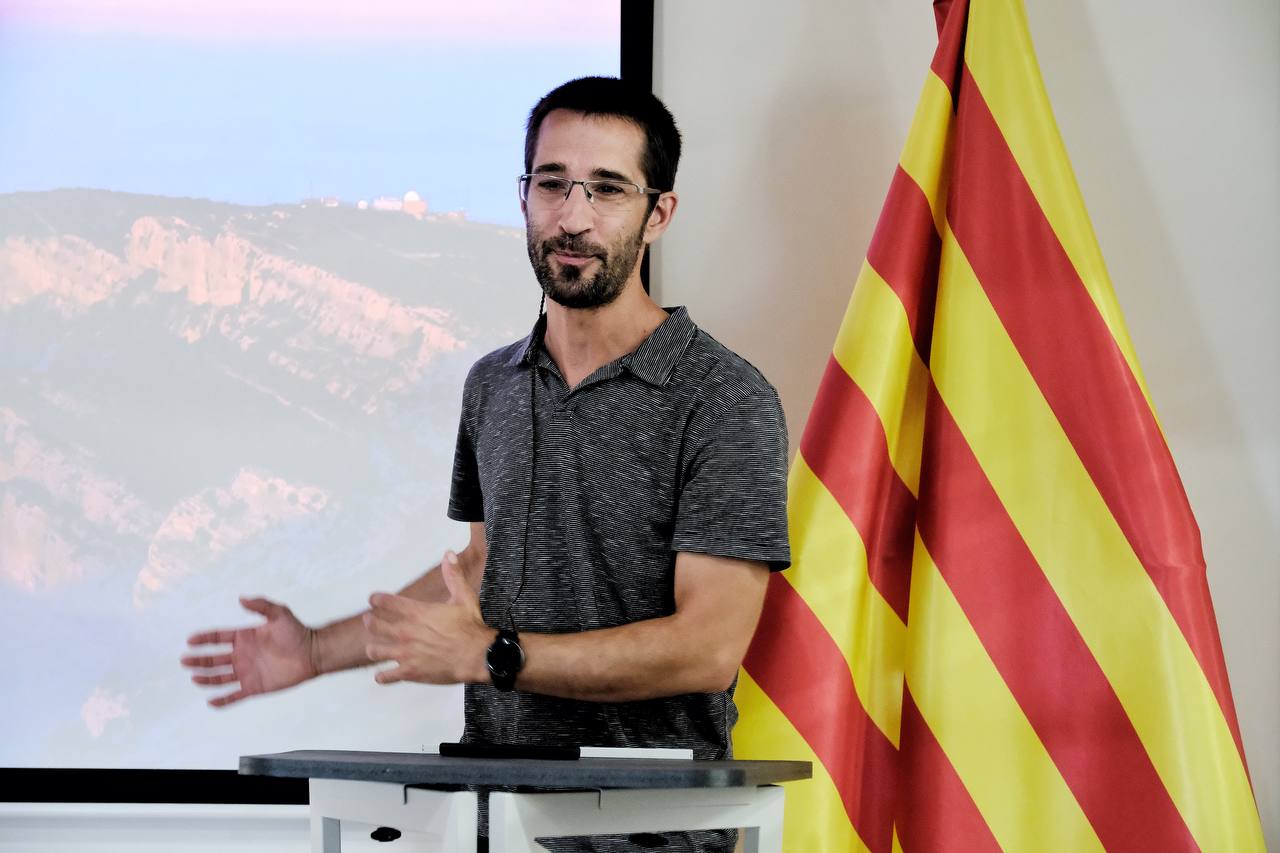
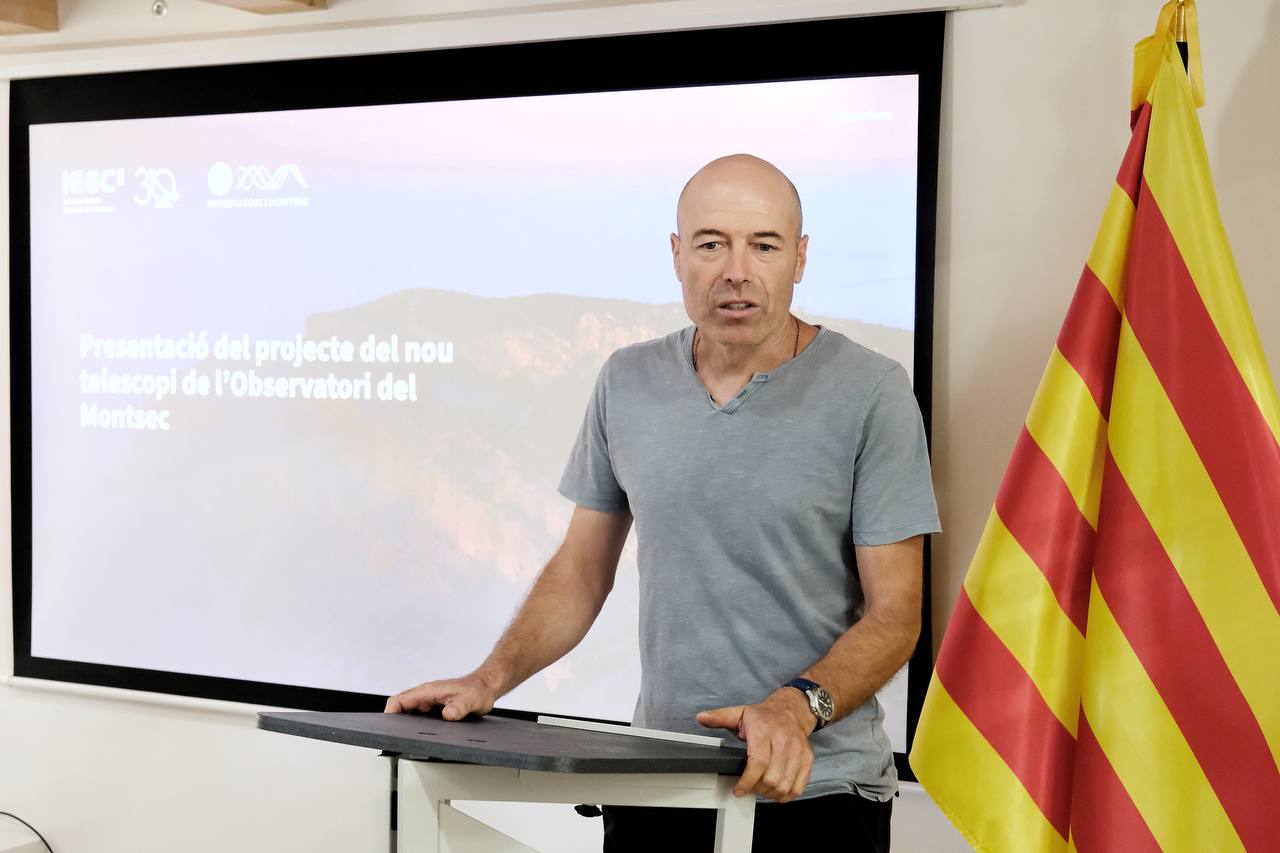
In addition to the Minister and the director of the IEEC, the presentation event held this morning was attended by the mayor of Sant Esteve de la Sarga, Jordi Navarra; the director of the Montsec Observatory, Kike Herrero; the Spanish Government delegate to the Alt Pirineu i Aran, Sílvia Romero, and the Director General for Research, Teresa Sanchis.
An investment of over €20 million
The Catalan Government will shortly allocate an investment worth €10,090,000 to finance the construction project of the new telescope at the IEEC. The telescope will feature a 2.5-metre diameter mirror, representing a significant leap forward in its observation capabilities: the Montsec Observatory’s current Joan Oró Telescope (TJO) has a primary mirror of 0.8 metres in diameter.
This contribution from the Catalan Government will now make it possible to address the tendering investments for the telescope and the dome, as well as the executive project, the specification of the instrumentation and the potential hiring of new staff. This phase includes the construction of the building that will house the telescope and its dome, as well as the completion of the civil works and the design and manufacturing of the telescope itself.
Research with the new telescope
The technical proposal submitted by the IEEC to the Catalan Government contemplates the deployment of a Ritchey-Chrétien telescope equipped with a multi-fibre spectrograph with an integral field unit (IFU) with a resolution of 500–1,000. It is a versatile facility capable of performing everything from radial velocity measurements to the characterisation of variable and transient objects.
Prior to this, preparatory tasks and investments worth €2 million have already been carried out, consisting of obtaining environmental and construction permits, preparing infrastructure, adapting existing buildings and ensuring connectivity and energy storage. Actions are also being carried out in the area of auxiliary systems, in situ testing and monitoring systems have been implemented, and computers and data storage equipment have been acquired, with a joint investment worth €2 million.
For the 2027–2030 period, further investment actions totalling €8.1 million have been planned, under which the telescope’s primary instrumentation (an imaging camera and a spectrograph) will be developed and installed for its start of operations, including the hardware and software for data management.

Jordi Torra i Roca telescope
The new telescope will be named after Jordi Torra i Roca (Barcelona, 1949–2019) in honour of the man who was director of the IEEC between 2015 and 2017. The Catalan astronomer focused his research career on the study of the structure, formation and evolution of the Milky Way. He was the leader of the Gaia team at the Universitat de Barcelona (UB) and also participated in other space missions, such as that of the optical camera on the OMC@INTEGRAL satellite, the SMART-2 mission, and in the definition of new astrometric missions for the European Space Agency (ESA), such as NEAT, THEIA and GaiaNIR.
Torra was one of the promoters of the creation of the Montsec Observatory and the Universe Observation Centre (Àger). He was also awarded the City of Barcelona Award in the field of science and technology (2013) and the Narcís Monturiol Medal (2018).
Image gallery
Contacts
Oficina de Comunicació de l’IEEC
Castelldefels, Barcelona
Correu electrònic: comunicacio@ieec.cat
About the IEEC
The Institute of Space Studies of Catalonia (IEEC — Institut d’Estudis Espacials de Catalunya) promotes and coordinates space research and technology development in Catalonia for the benefit of society. IEEC fosters collaborations both locally and worldwide and is an efficient agent of knowledge, innovation and technology transfer. As a result of 30 years of high-quality research, done in collaboration with major international organisations, IEEC ranks among the best international research centres, focusing on areas such as: astrophysics, cosmology, planetary science, and Earth Observation. IEEC’s engineering division develops instrumentation for ground- and space-based projects, and has extensive experience in working with private or public organisations from the aerospace and other innovation sectors.
The IEEC is a non-profit public sector foundation that was established in February 1996. It has a Board of Trustees composed of the Generalitat de Catalunya, Universitat de Barcelona (UB), Universitat Autònoma de Barcelona (UAB), Universitat Politècnica de Catalunya · BarcelonaTech (UPC), and the Spanish Research Council (CSIC). The IEEC is also a CERCA centre.